Got land with old dead trees? Got yard brush? The Composting Association of Vermont brought solutions into the garden on day two of the Vermont Organics Recycling Summit (VORS).
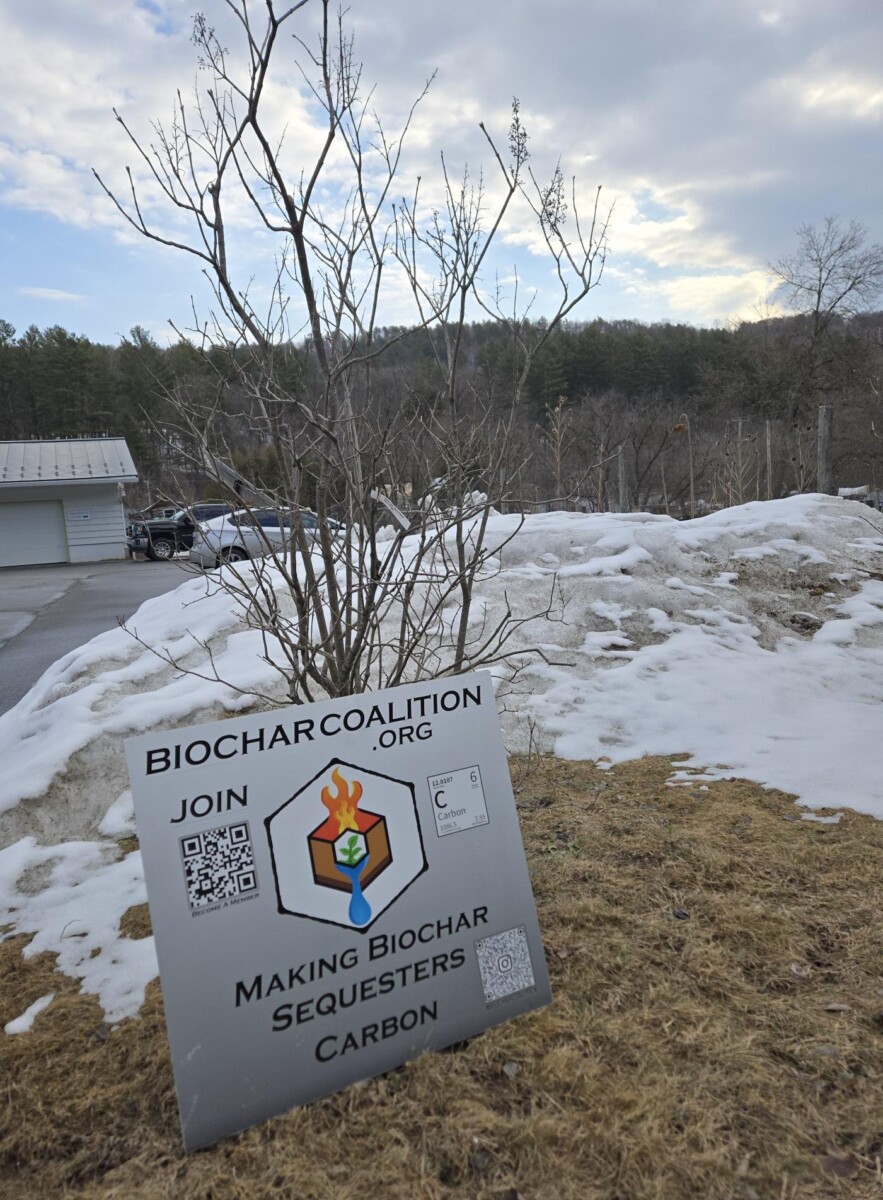
Ken Scherer, of the Biochar Coalition, demonstrated safely converting excess woody biomass into high-quality biochar using flame-cap kiln methods. Transforming these materials into a stable carbon resource improves soil health, water retention, and nutrient cycling. Meet Ken:
For after the kiln quenching, Jack Eaton, erosion control specialist with Carriff Engineered Fabrics, brought biodegradable compost filter socks to fill with biochar-enriched media. This turns local biomass into long-term ecological and soil health assets. Meet Jack:
What do you do with a biochar kiln?
Key ingredients: having enough wood, especially dry wood, ideally with 4″ center mass, and the right size kiln.
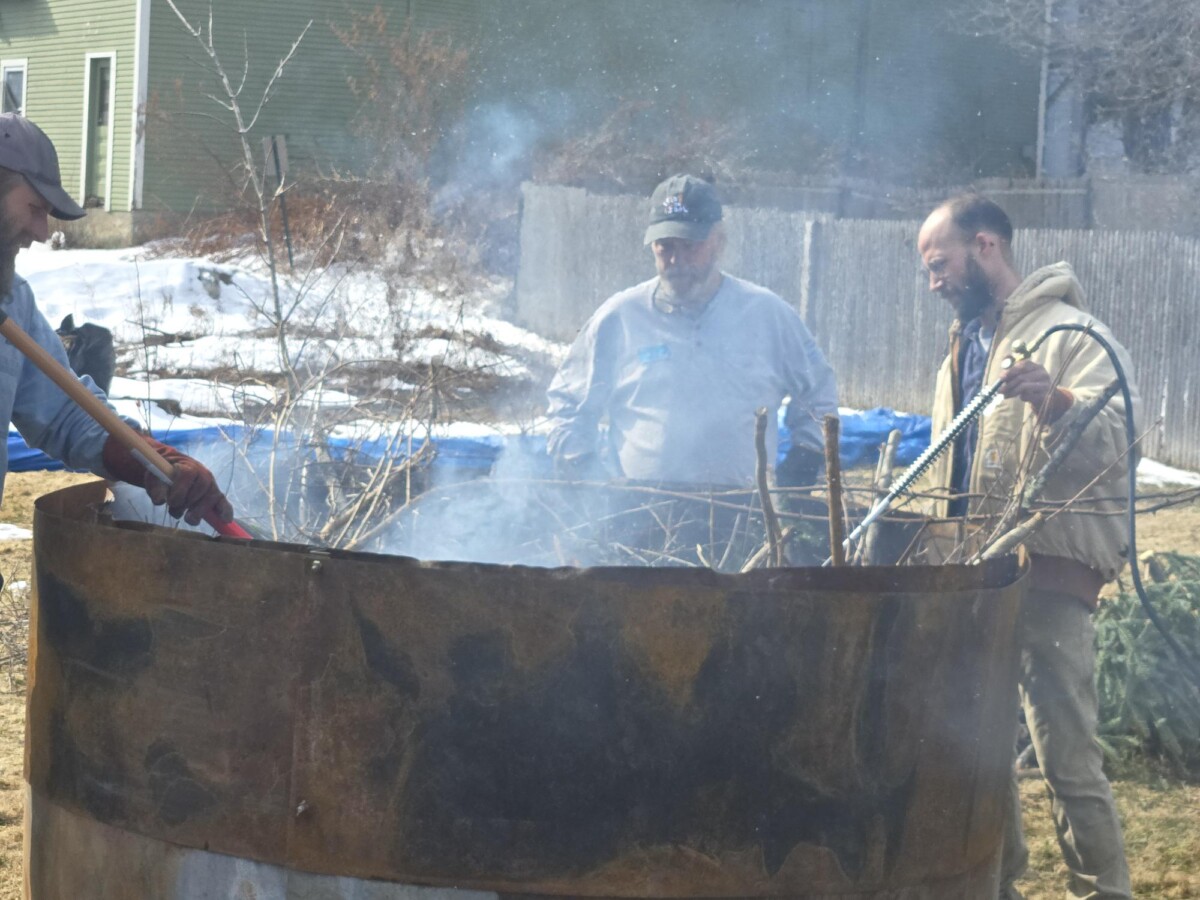
The kiln is lit. It’s safe if you’re careful and know what you’re doing.
What a beautiful day to stand by a warm fire, talk with inspiring people, and gaze out at the river.
The kiln burned up all the brush intended for the workshop. Participants dragged felled black locust trees up from the riverside.
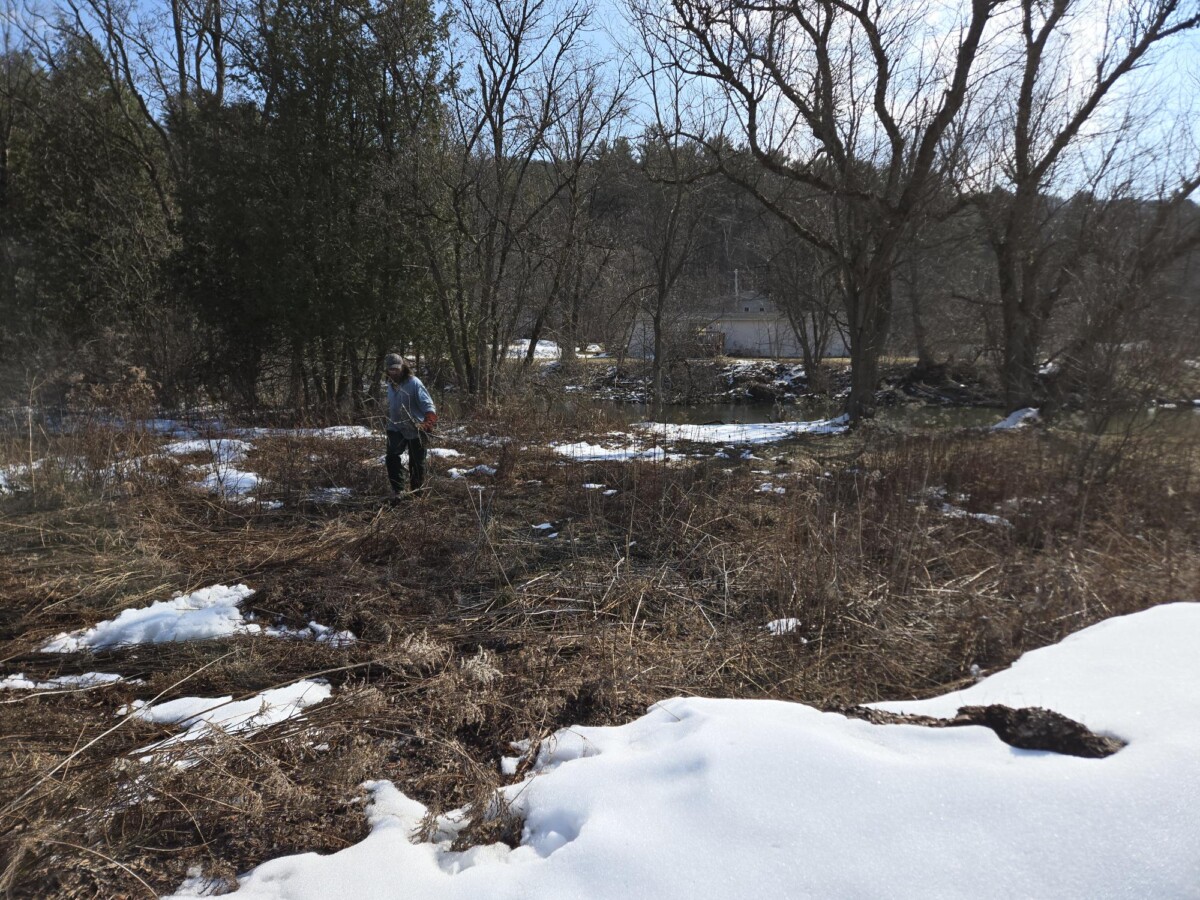
Grab anything burnable, throw it in!
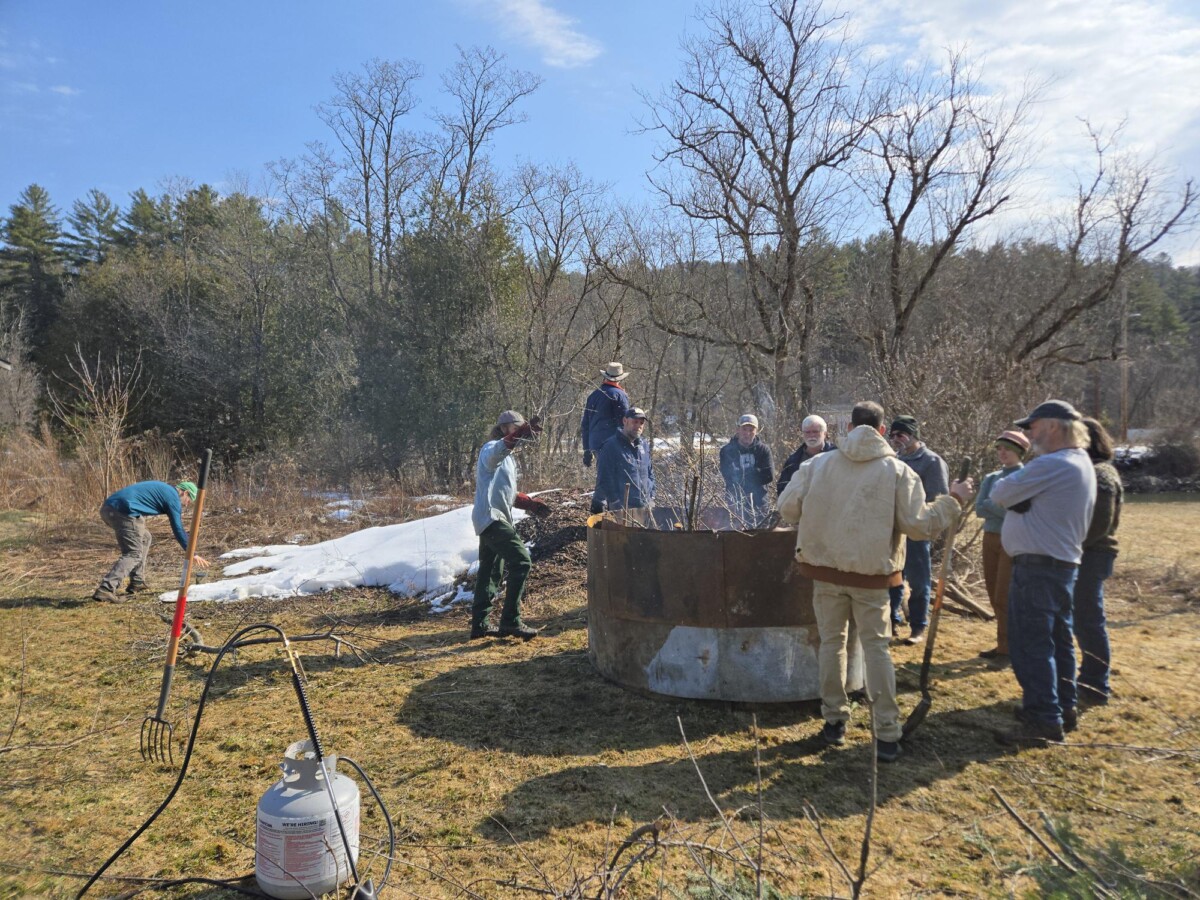
Finally, into the kiln went scraps of hemlock too small for the garden-bed projects they were part of. The kiln heats up to 2,200–3,000 degrees. This kiln could burn up to four cords of dry wood in a few hours. Montpelier hasn’t had a stump dump since it closed in 2023, and a biochar kiln like this one could serve an essential need while producing rich soil nutrition.
To make biochar, you don’t have to use this kind of kiln. Any enclosed unit with a stack or a burn pit will do. A pit is slower and harder to dig, and then must be protected or filled.
Unlike with this kiln, a top-down burn with no restriction of oxygen yields only 2% biochar and must be quenched then and there.
A kiln is portable and faster. Ken says that FlameWise Biochar Kilns, for homeowners, are 4’x4′ or 3’x3′ and sell for about $2,200. You can make your own. Wing nuts hold this one together, but you can build a kiln using a scaffolding model, with pins that more easily push in and pull out.
“We’re starting to build that coal bed finally.”
Time to put the fire out. A hundred gallons of water would quench a kiln this size that’s filled with coal. We didn’t need nearly that much.
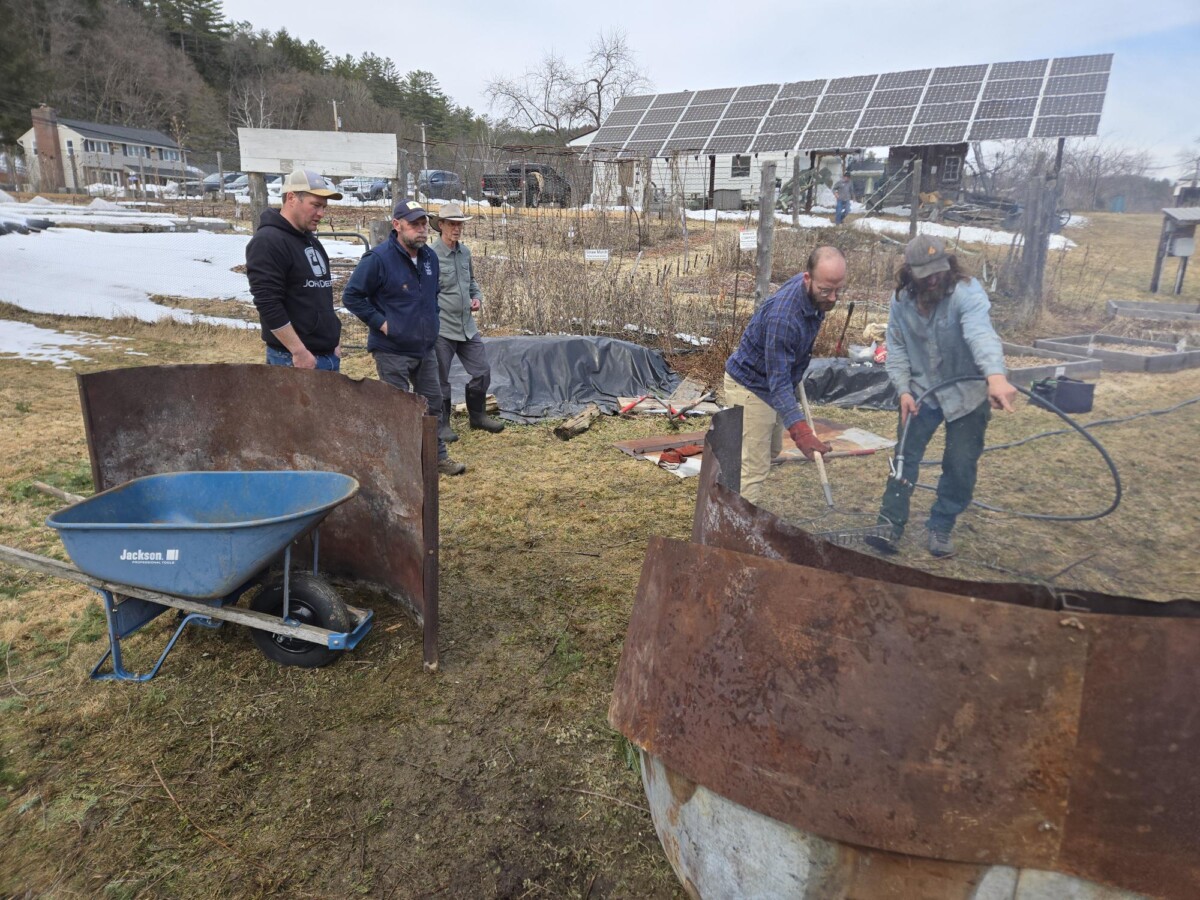
After the fire comes separating the charcoal from the burn.
This wood has 40% moisture. The burn makes 5% ash and 95% biochar 95%. The best stuff is on the bottom. The upper layers are less burnt. “You don’t want a shine, no rainbow,” indicating the coals are still holding carcinogenic tars.
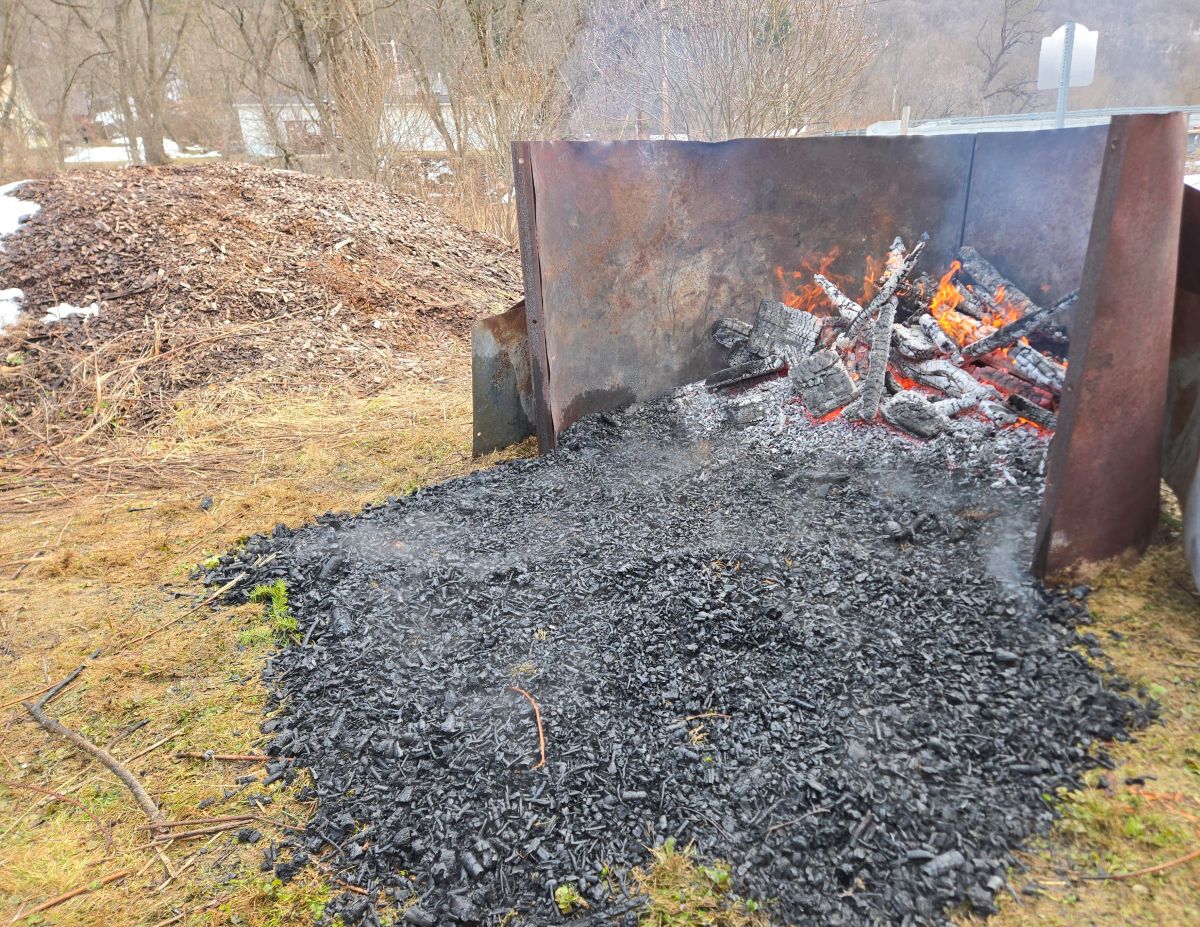
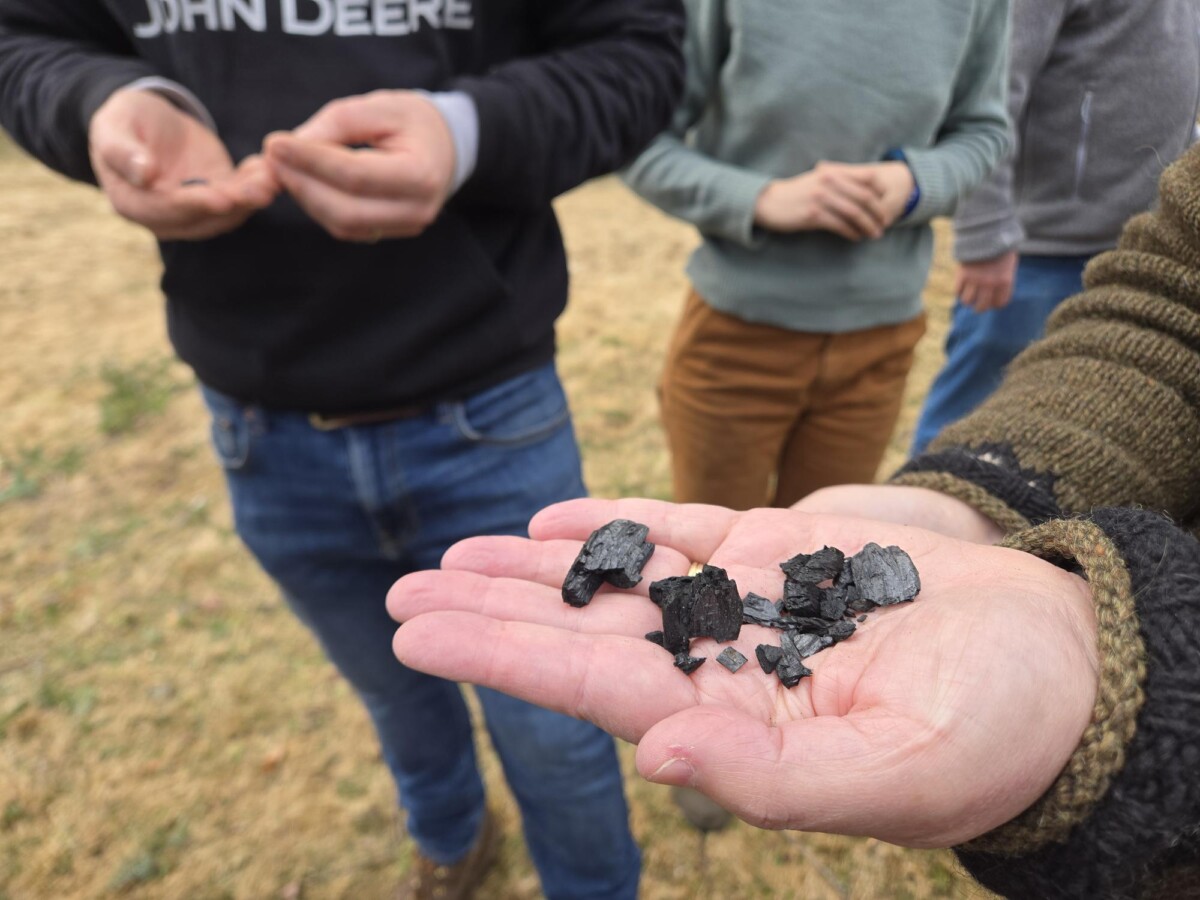
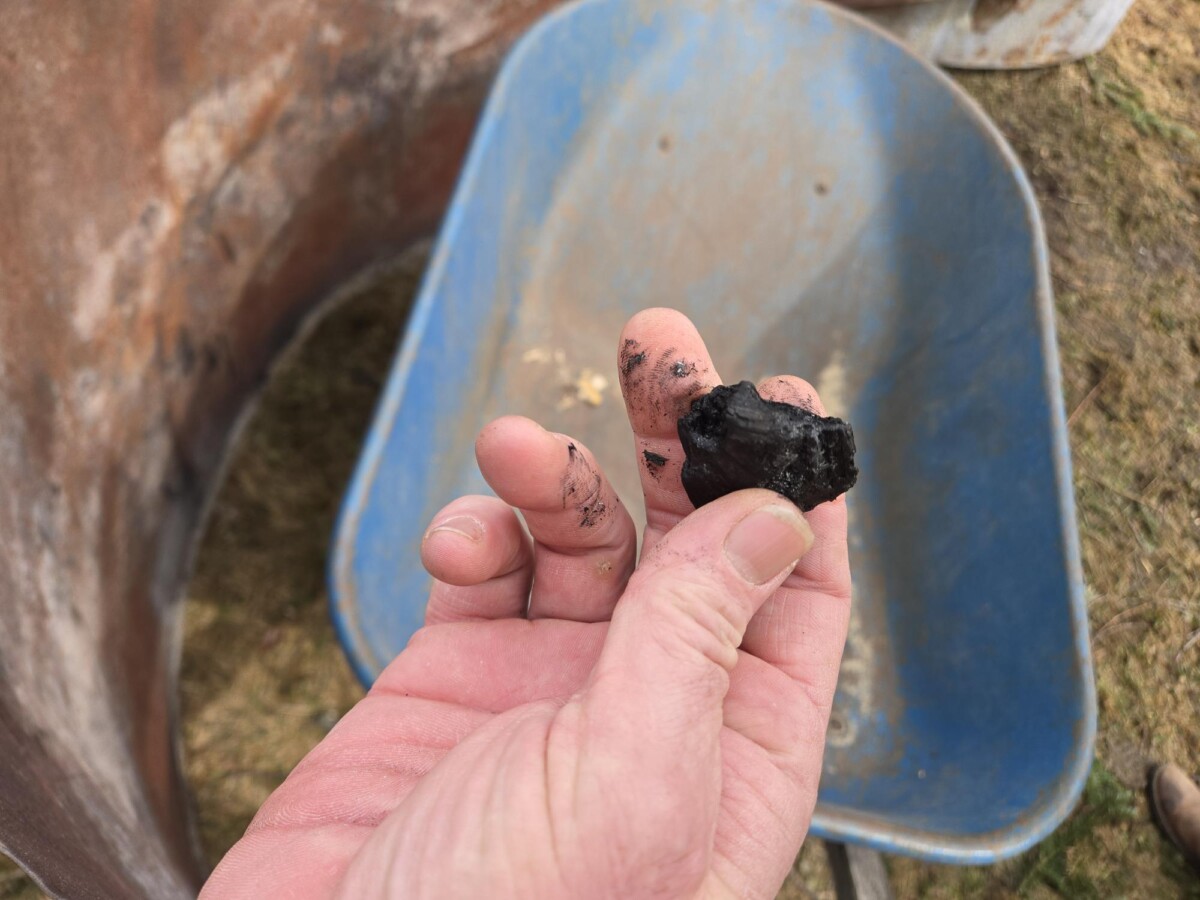
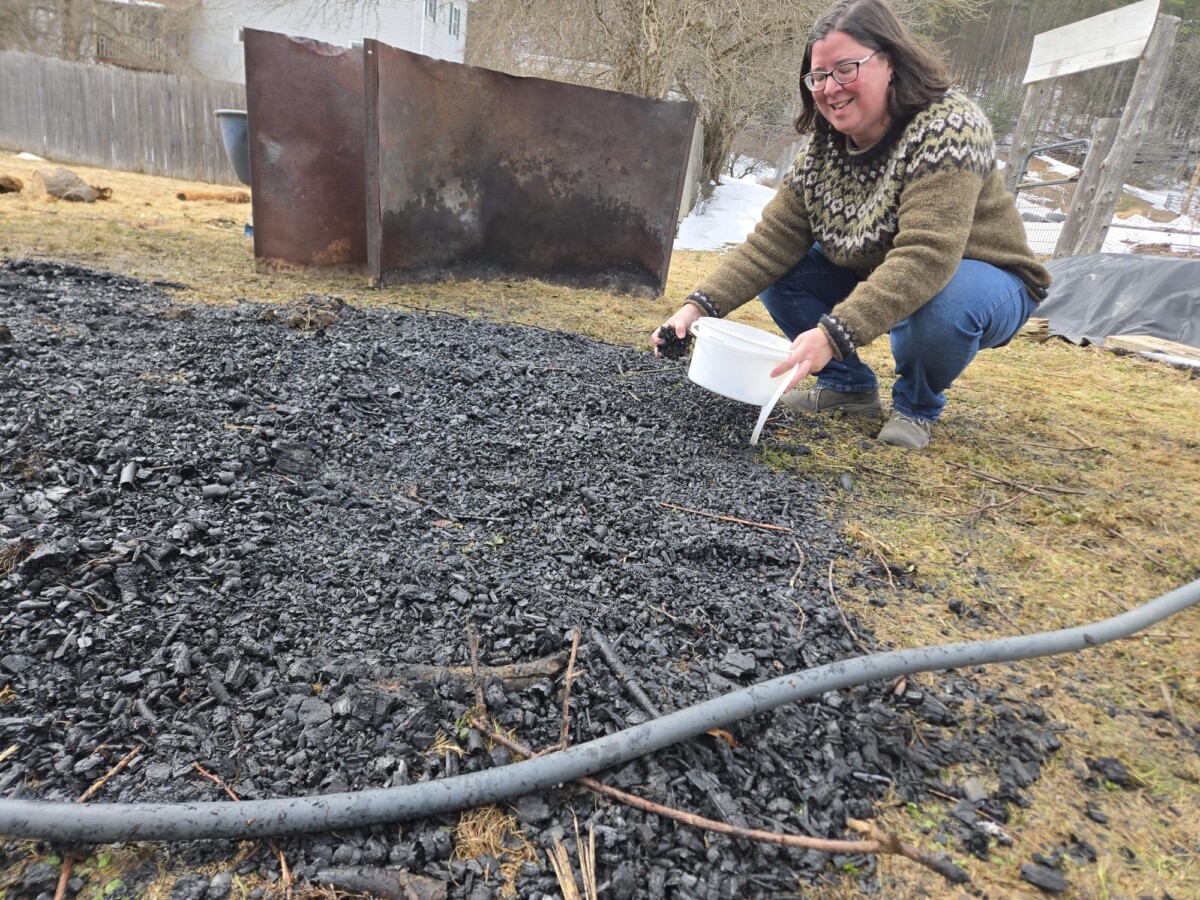
Biochar in the hand.
Here at the garden, we could apply 3″–4″ of biochar to the beds and cover that with >1″ of leaves at the end of the season to overwinter. Today’s yield was small; we’ll add it to the top of the garden waste windrow, turn it downhill all season, and let it overwinter, becoming next season’s compost.
Now for the biodegradable compost filter socks.
Jack says that ideally, make biochar in the fall and leave it to overwinter. You can inoculate biochar, aka treat it with microbes that you’d want in your compost. Leave it uncovered, or cover it with leaves and leaf litter. It wants to be “charged” with water.
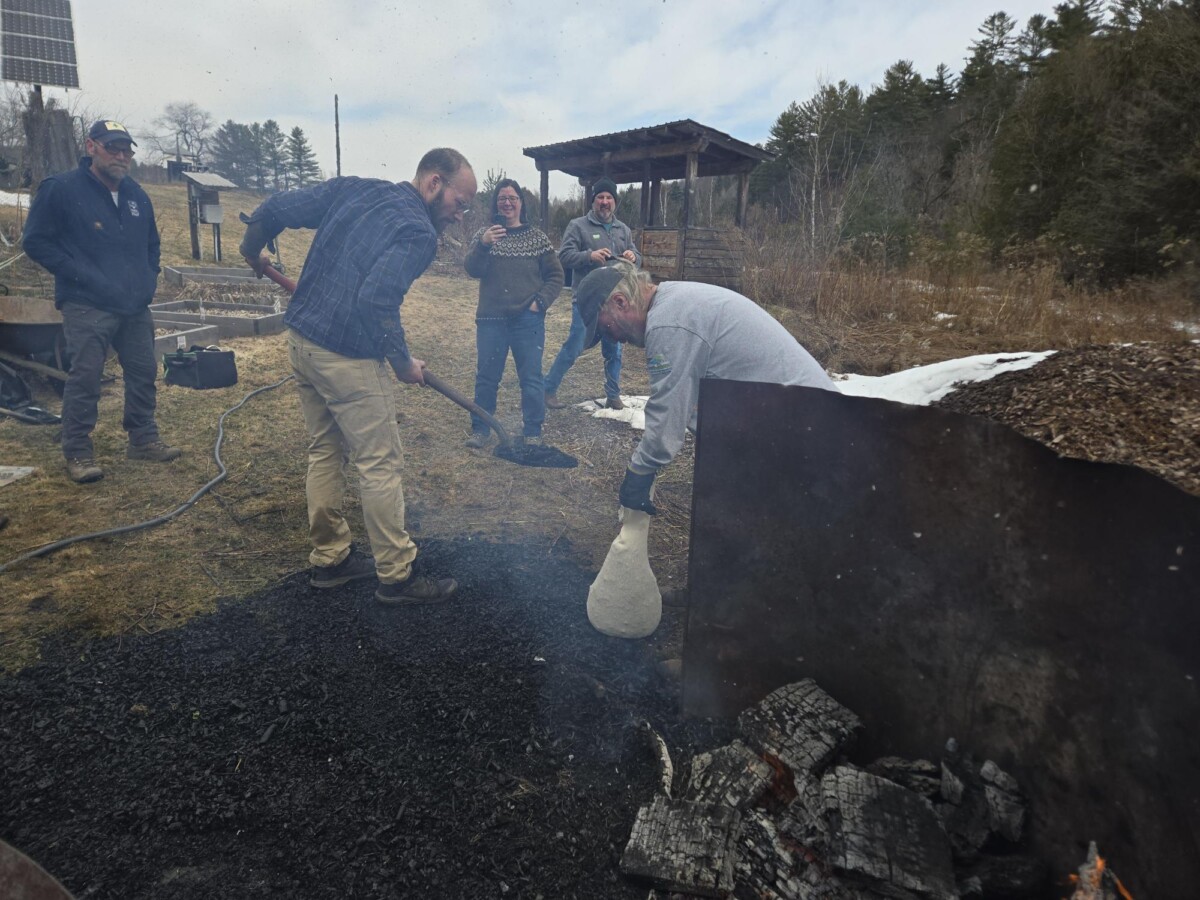
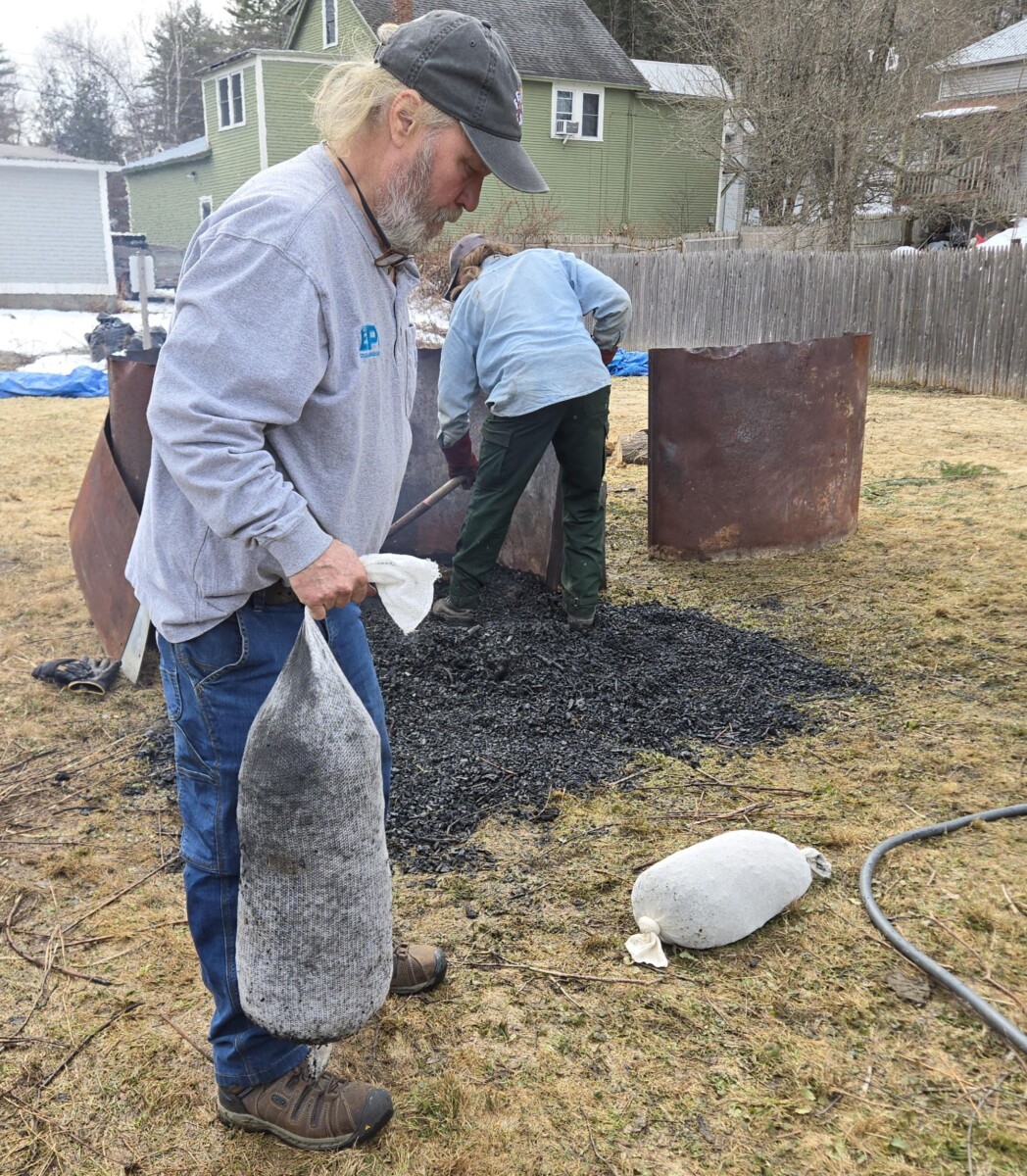
“This will make a micro-skeleton. Life will go into it, live in it, and come out of it.”
What’s happening in the garden with biodegradable compost socks? Stay tuned.
Natasha Duarte, director of the Composting Association of Vermont, takes some biochar to go.
Delightful terms heard today: ring of fire, nanostructure, grooves, porosity, “Know it’s time to feed or quench out the coals,” flash off, and charmy (the char army Ken wants to build).
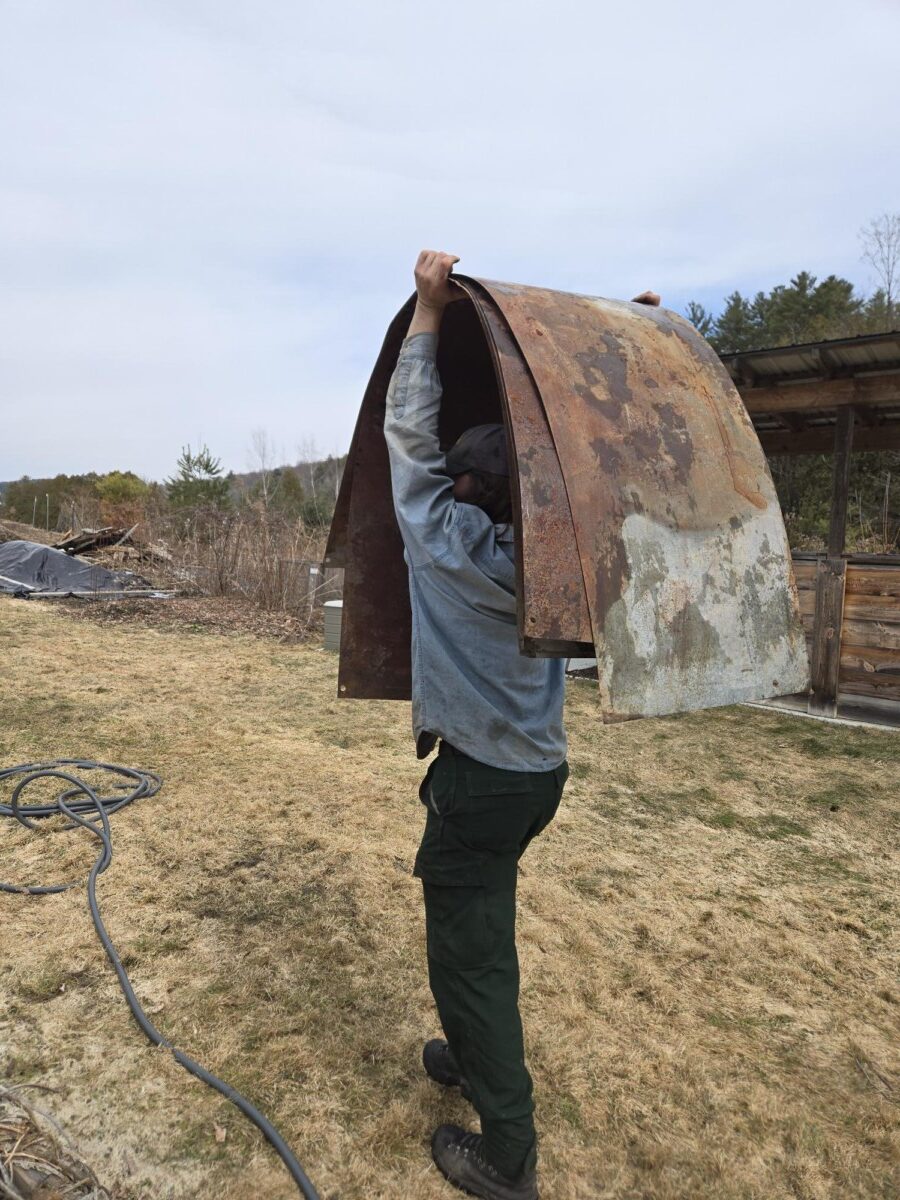
Turns out the kiln is a to-go item too!