Garlic is a very special crop. It’s delicious, healthy, easy to grow, high yielding, and far less expensive than purchasing organic garlic. Stored properly, it will last a very long time. Most gardeners have enough for the entire year, even when giving some away.
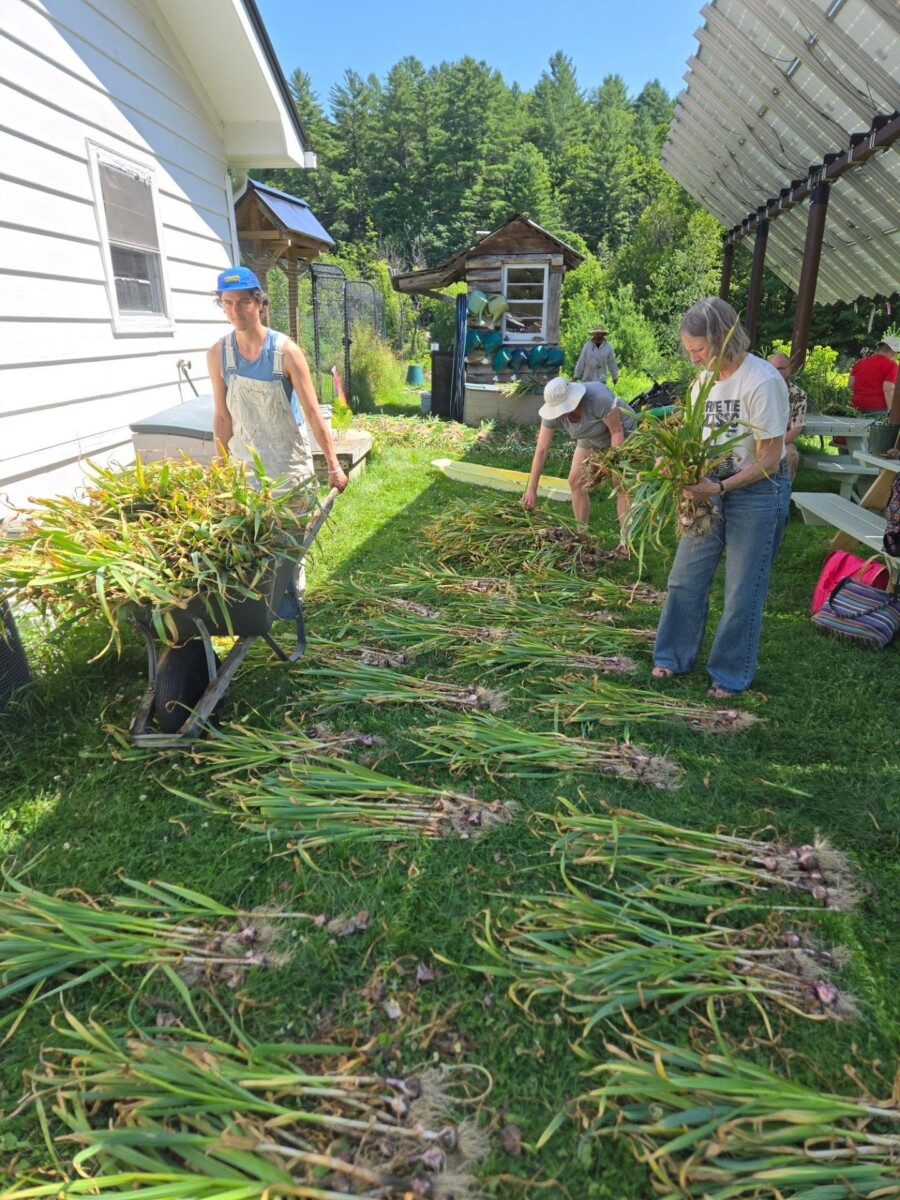
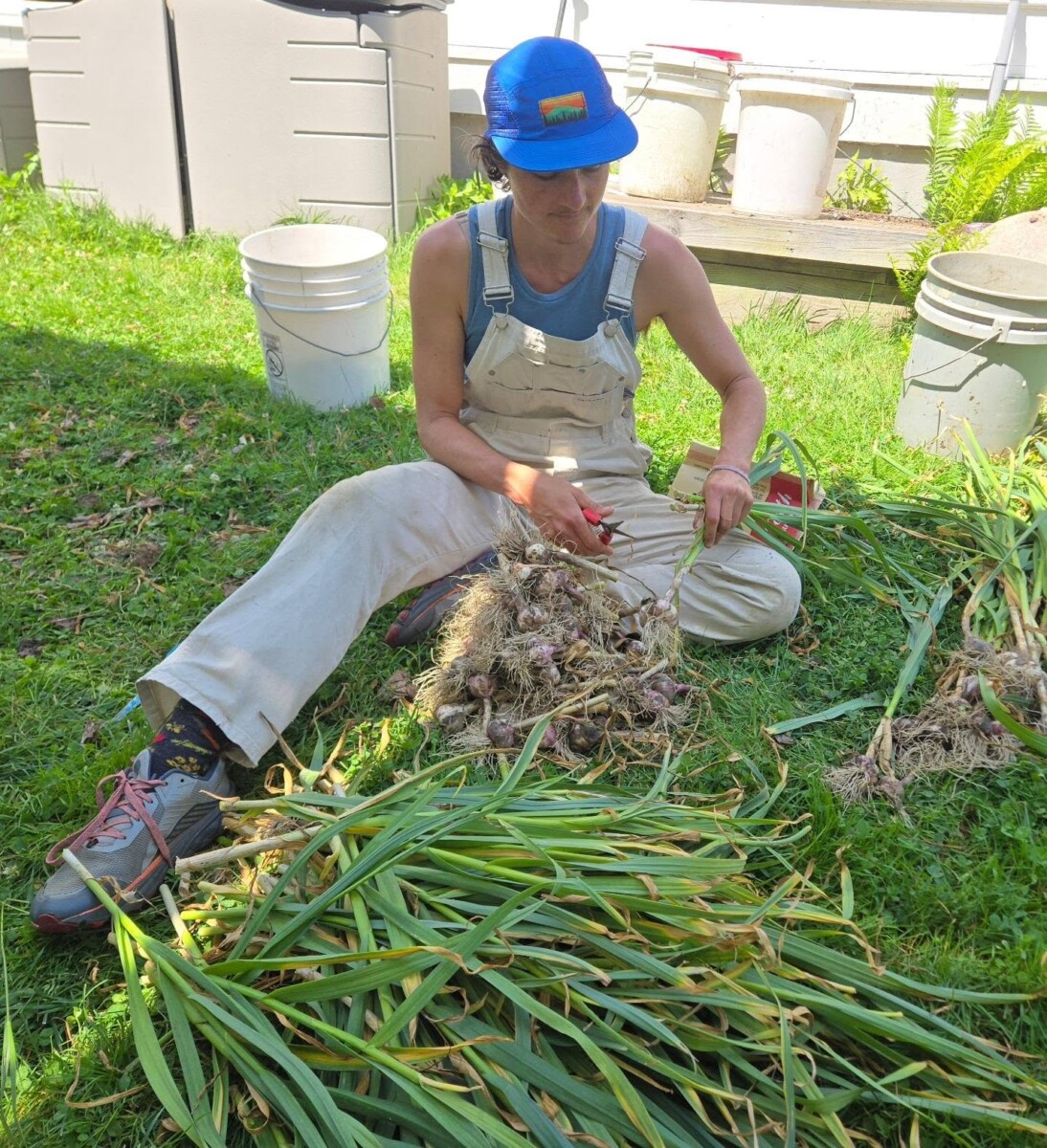
Garlic planting day starts back in July, on Garlic harvest day. Gardeners separate garlic according to variety. This year, gardeners harvested Jell Strain, Moreno hillside, and porcelain garlic, and a small crop of elephant garlic seed, intended for expansion into ample shares due to higher demand.
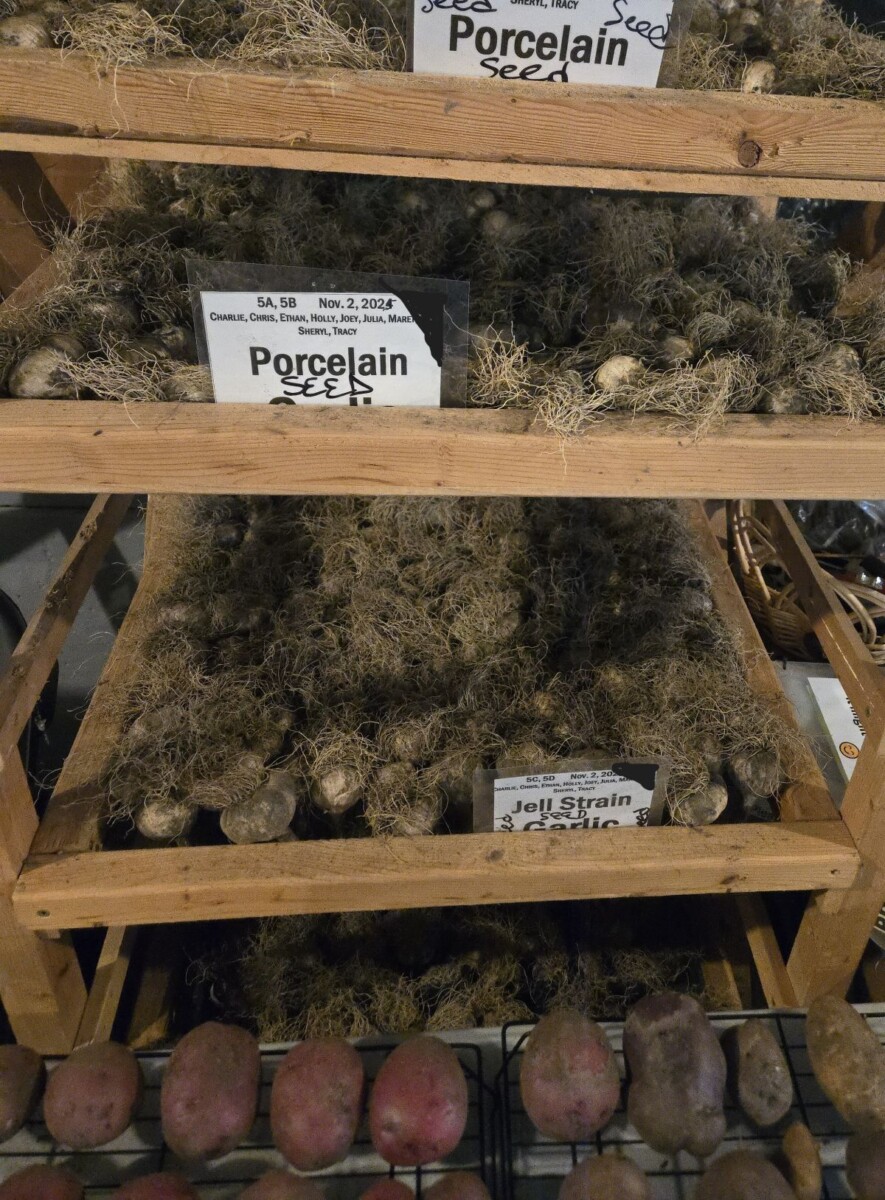
The finest heads of each garlic variety are held back to seed next season’s crop. The rest of the gorgeous crop, divided into shares, went home with garden volunteers.
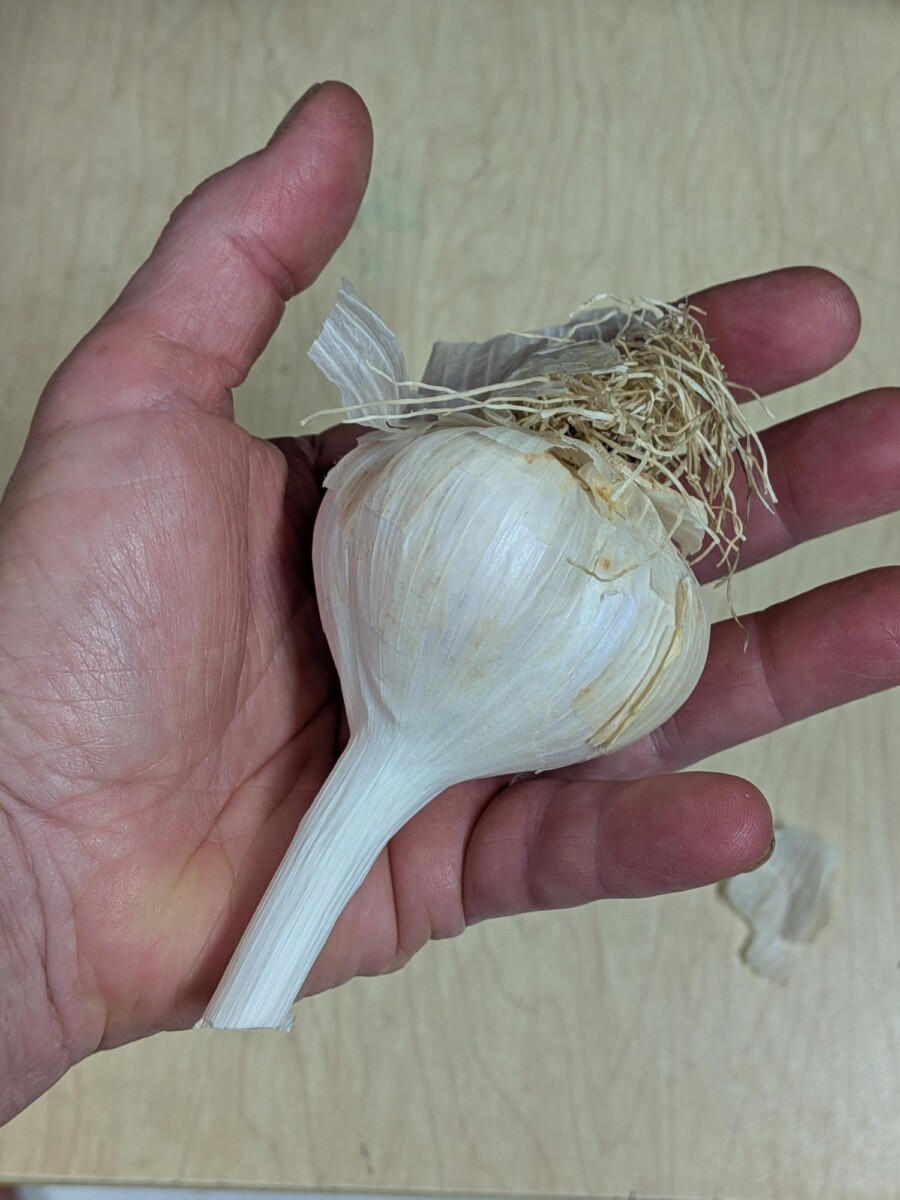
Something new! This glorious garlic is named Music (perfect, right?). A generous gardener, whose hand is cradling the garlic, gave the garden a couple of pounds of this new seed garlic variety, grown at Sunnybrook Farm in Middlesex, Vermont. We’ll grow Music garlic as seed only until it’s plentiful enough to divide into shares too.
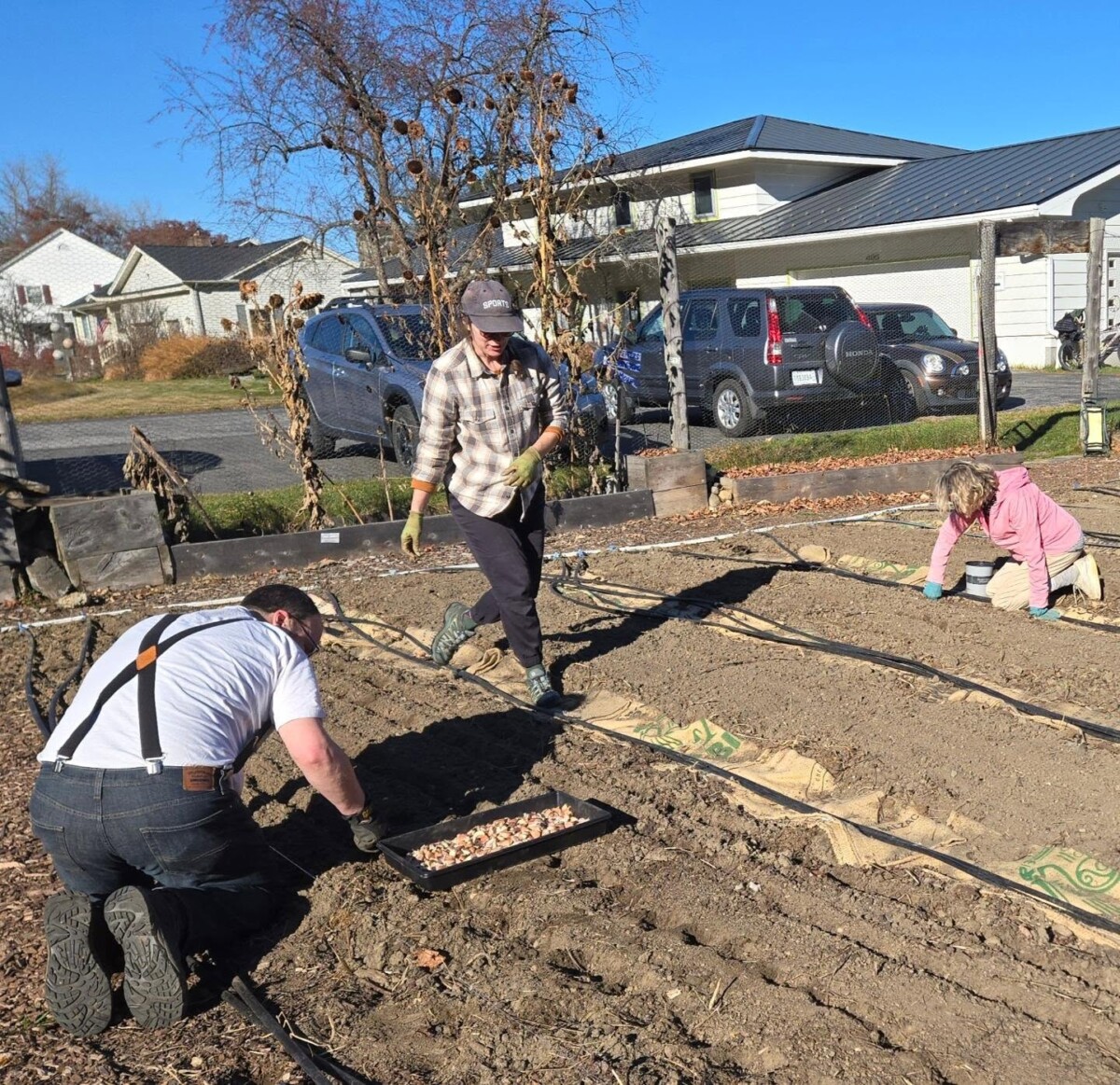
The stretch of time for planting garlic is late fall, when the temperatures drop below freezing most nights so next year’s crop won’t sprout and begin growing. We’ve planted garlic on cold rainy November days, even on snowy days. This year, gardeners lucked out: We had a beautiful sunny day for garlic planting.
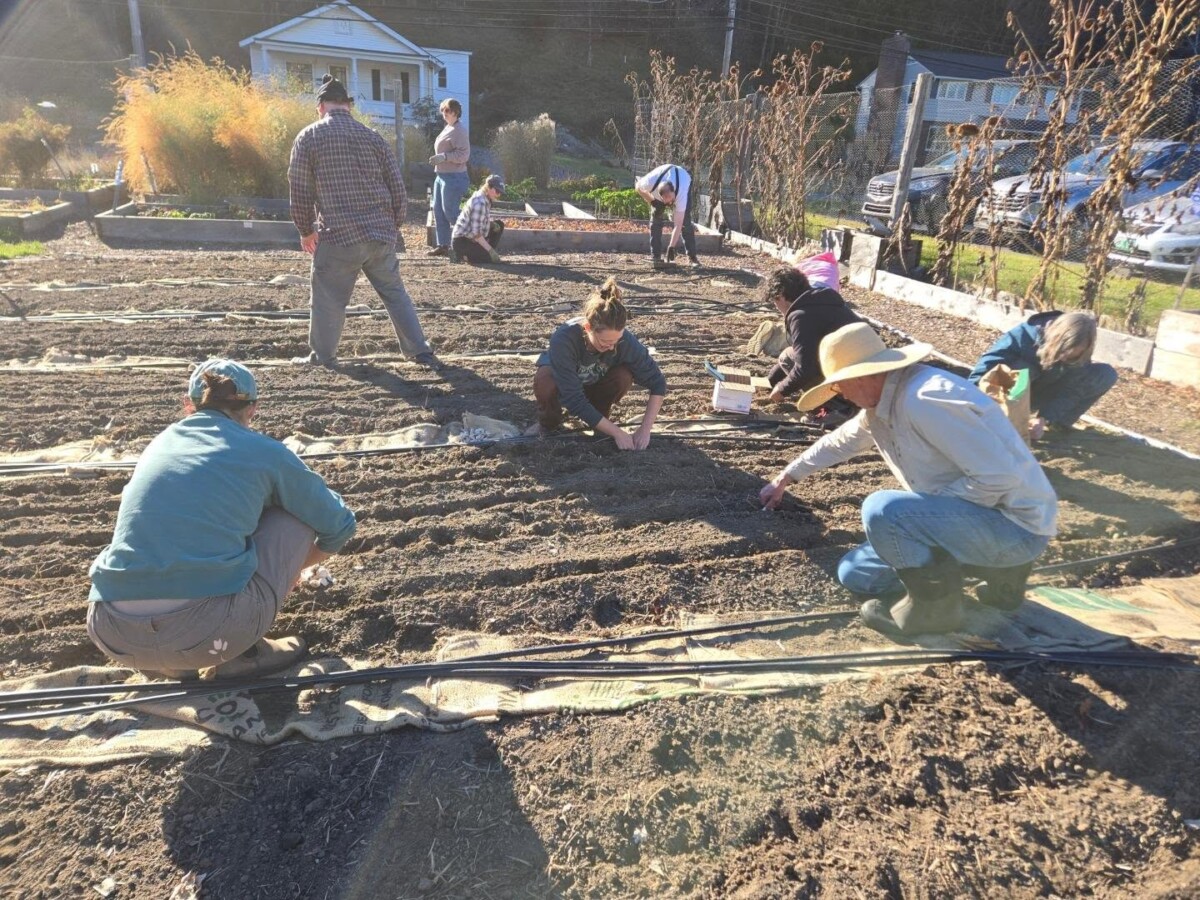
Gardeners drew furrows into rows, planting each garlic seed* 5″ to 6″ apart, or about a hand’s width.
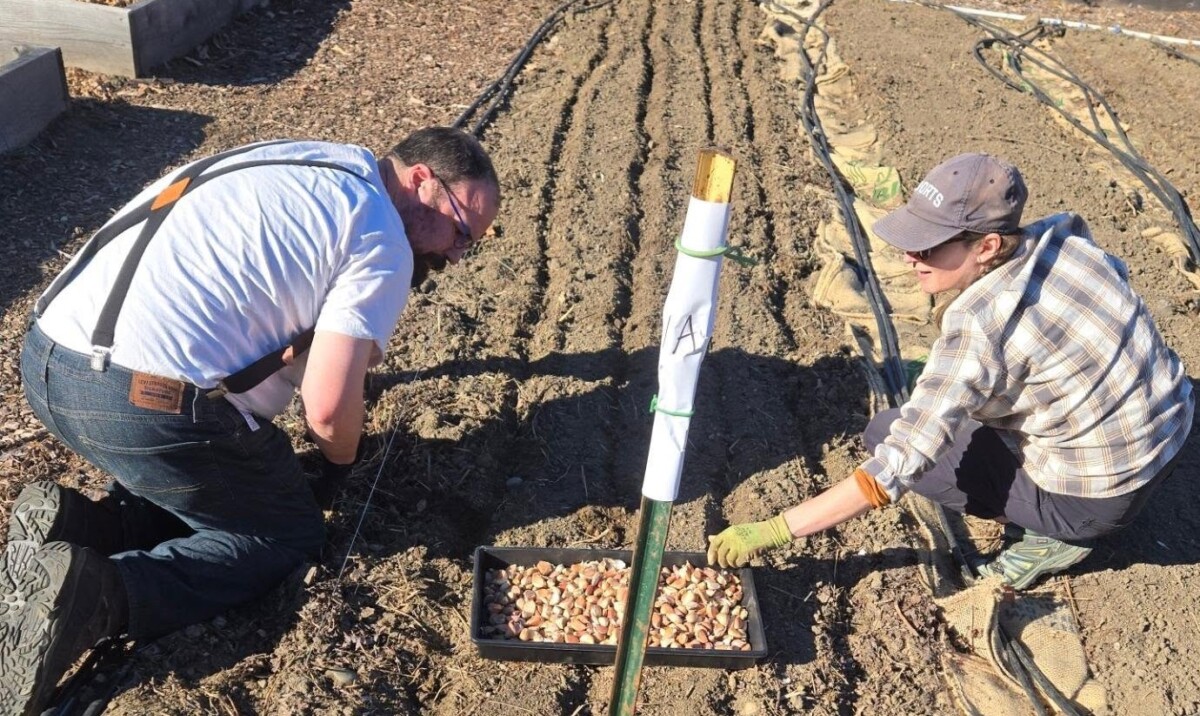
*What is a garlic seed? New garlic planters ask how the garlic seed we plant is different from the garlic we eat. Here goes: There’s no difference. A garlic seed is a single clove from a head of garlic. If it gets planted, it’s a seed. If it gets eaten, it’s food. These gardeners are planting Moreno hillside seeds (cloves).
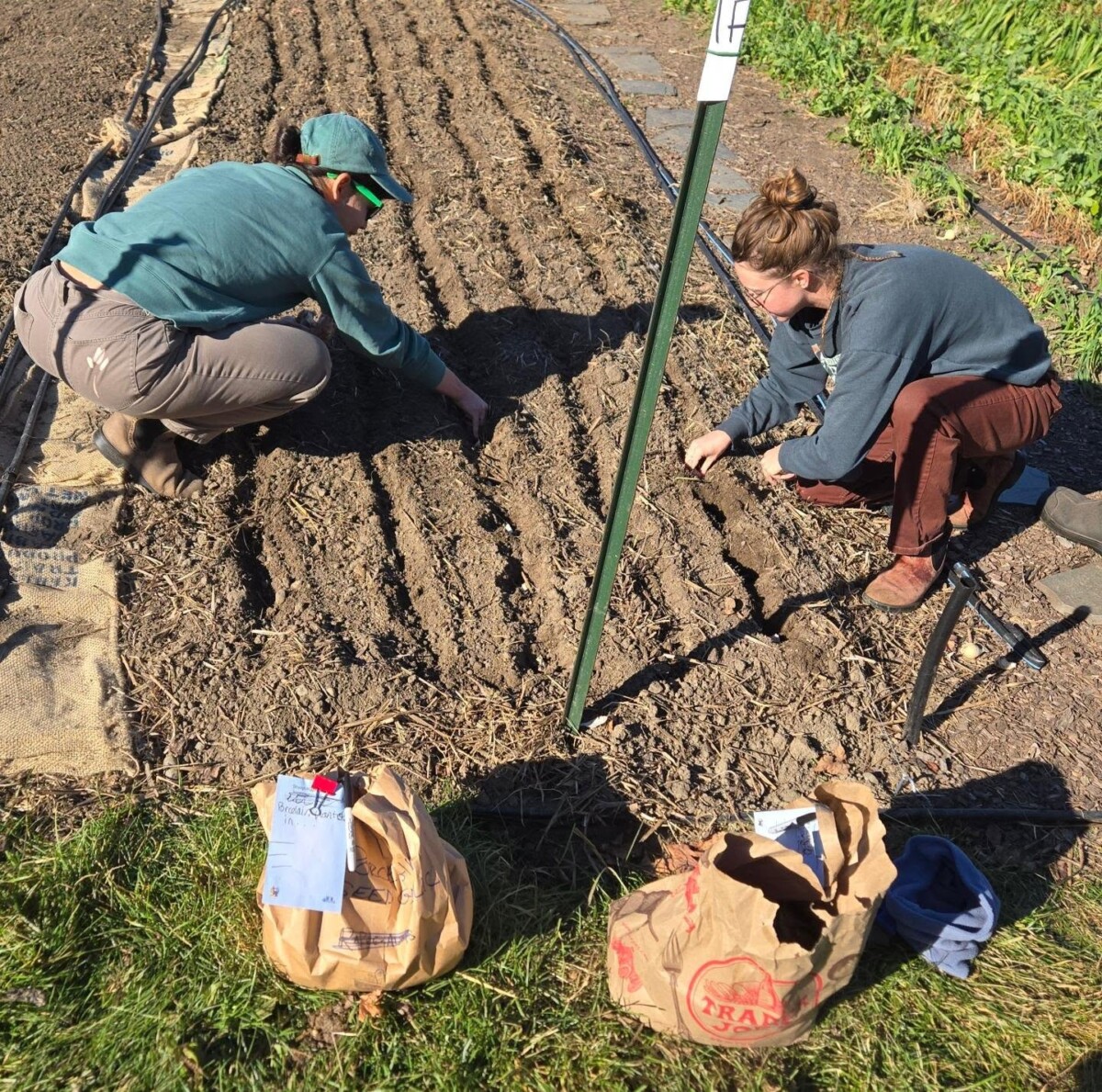
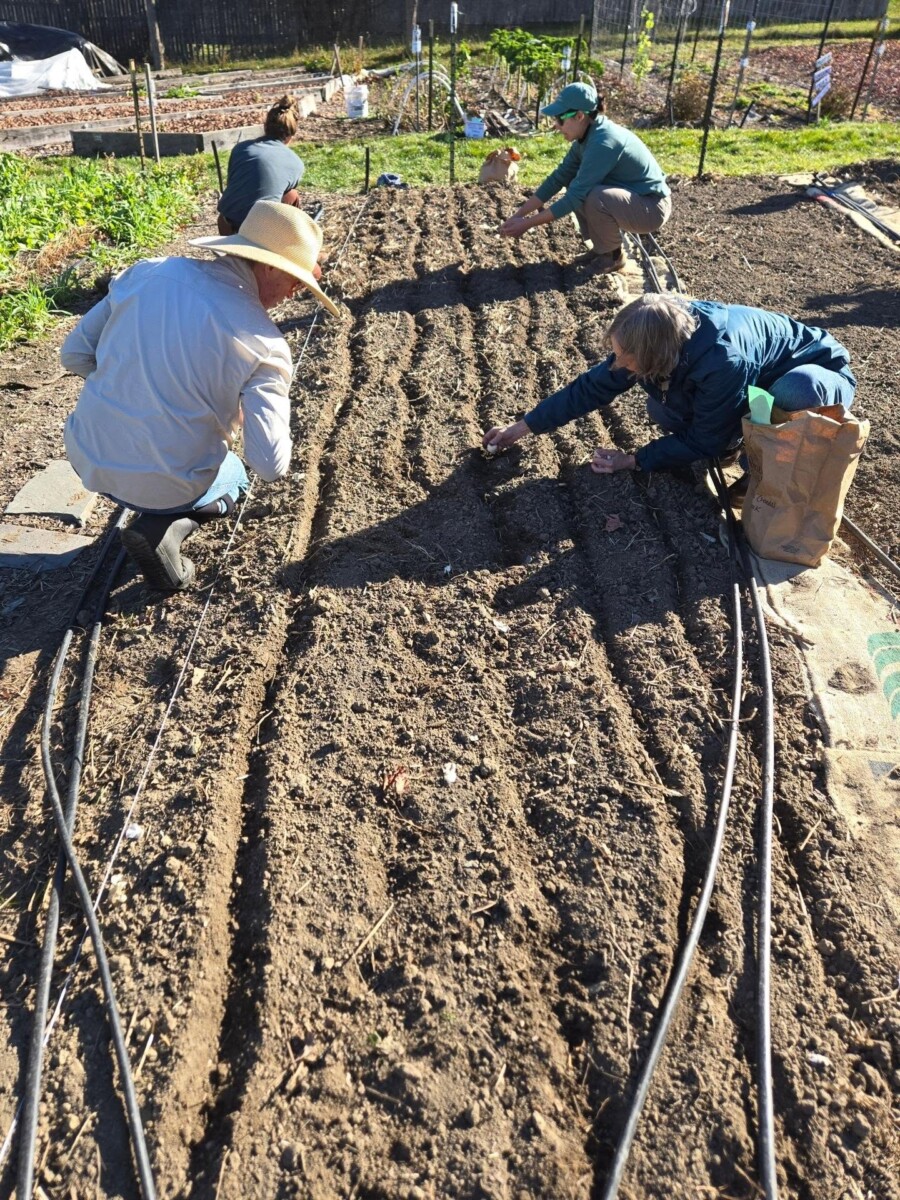
Gardeners plant each clove with the roots facing down (aka pointy end up), as deep as the clove is tall (“as above, so below”). Cloves of garlic varieties vary in size, so a general guideline is helpful.
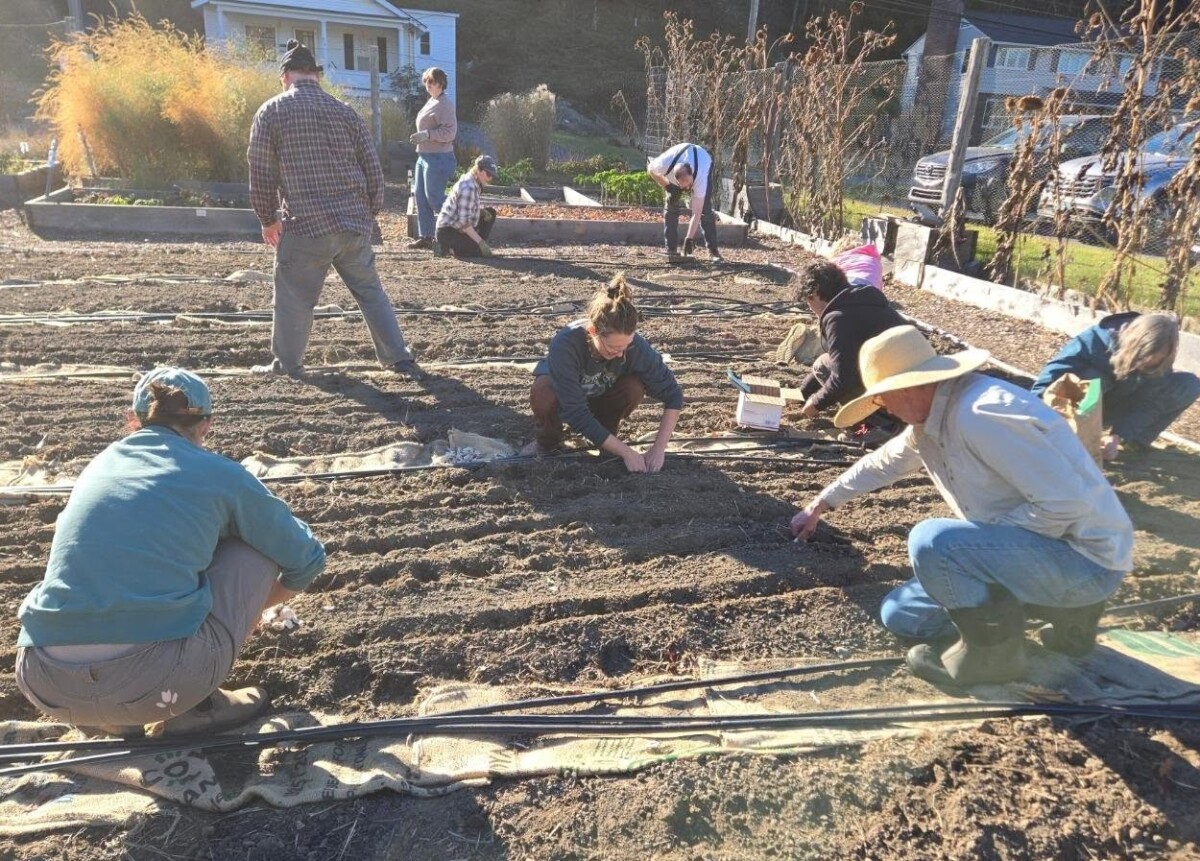
Thanks to garden volunteers who prepped the garlic bed earlier in the week, this day’s task went swiftly.
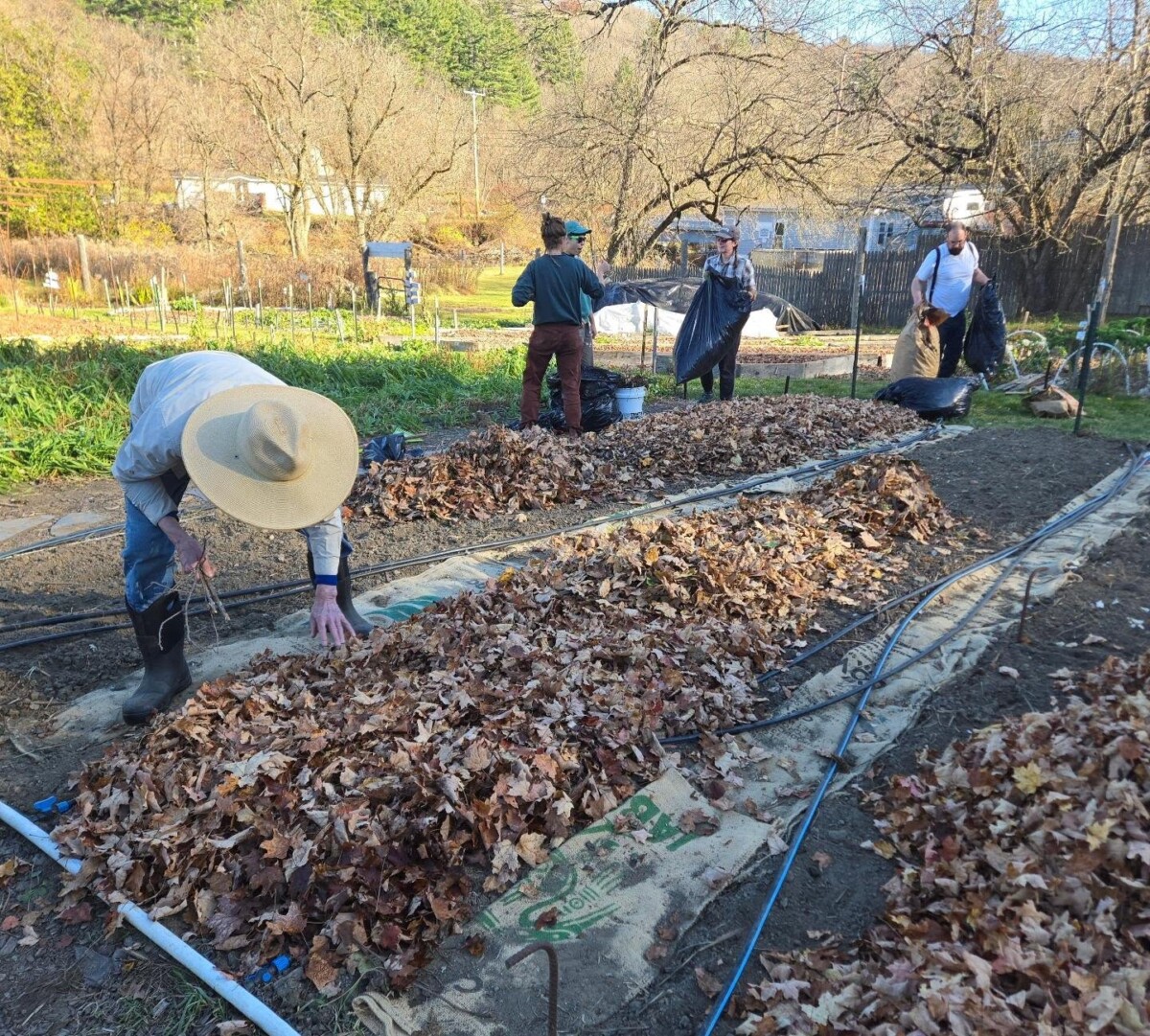
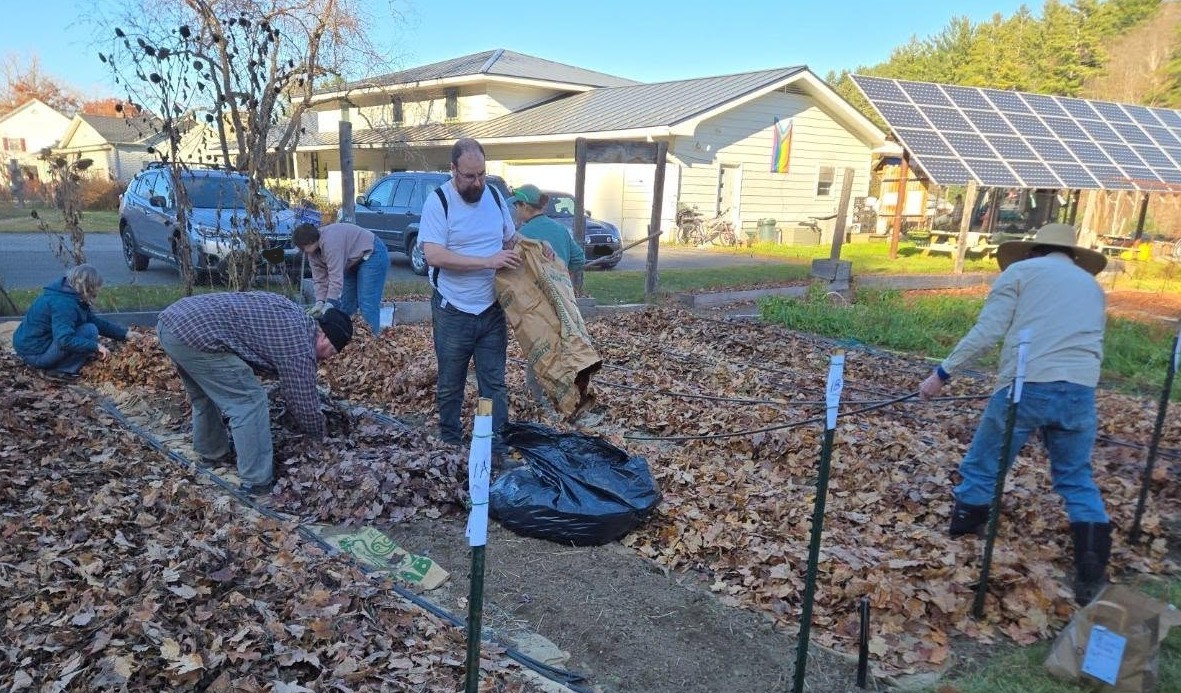
The final task is spreading leaves as mulch over the planted beds. This insulates the seeds, protects against heavy snow compacting the soil, adds nutrients to the earth, and provides some weed suppression in the spring, when this crop will emerge as the ground warms up again.
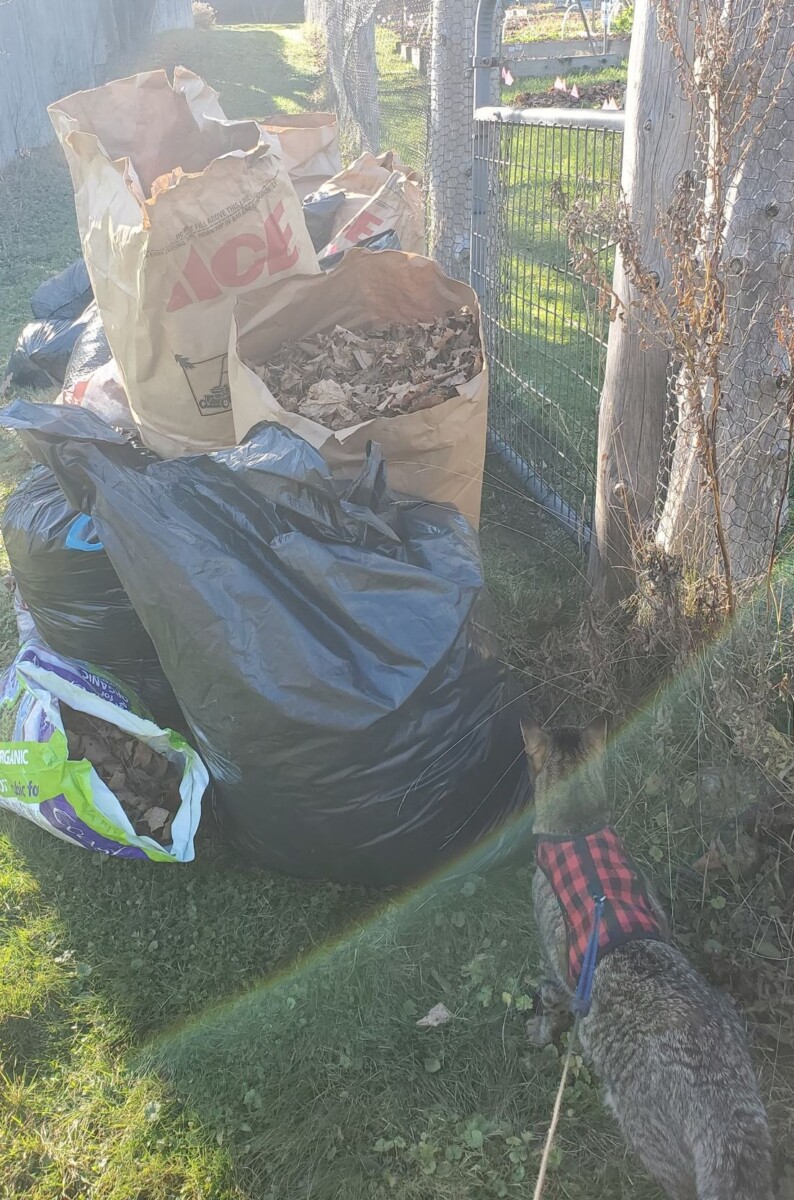
For leaf mulch, we favor early leaves, fallen from deciduous trees, especially maples. The Montpelier Public Works Department picks up leaves from Montpelier neighborhoods each fall, and we gratefully accept their deliveries of bagged leaves.
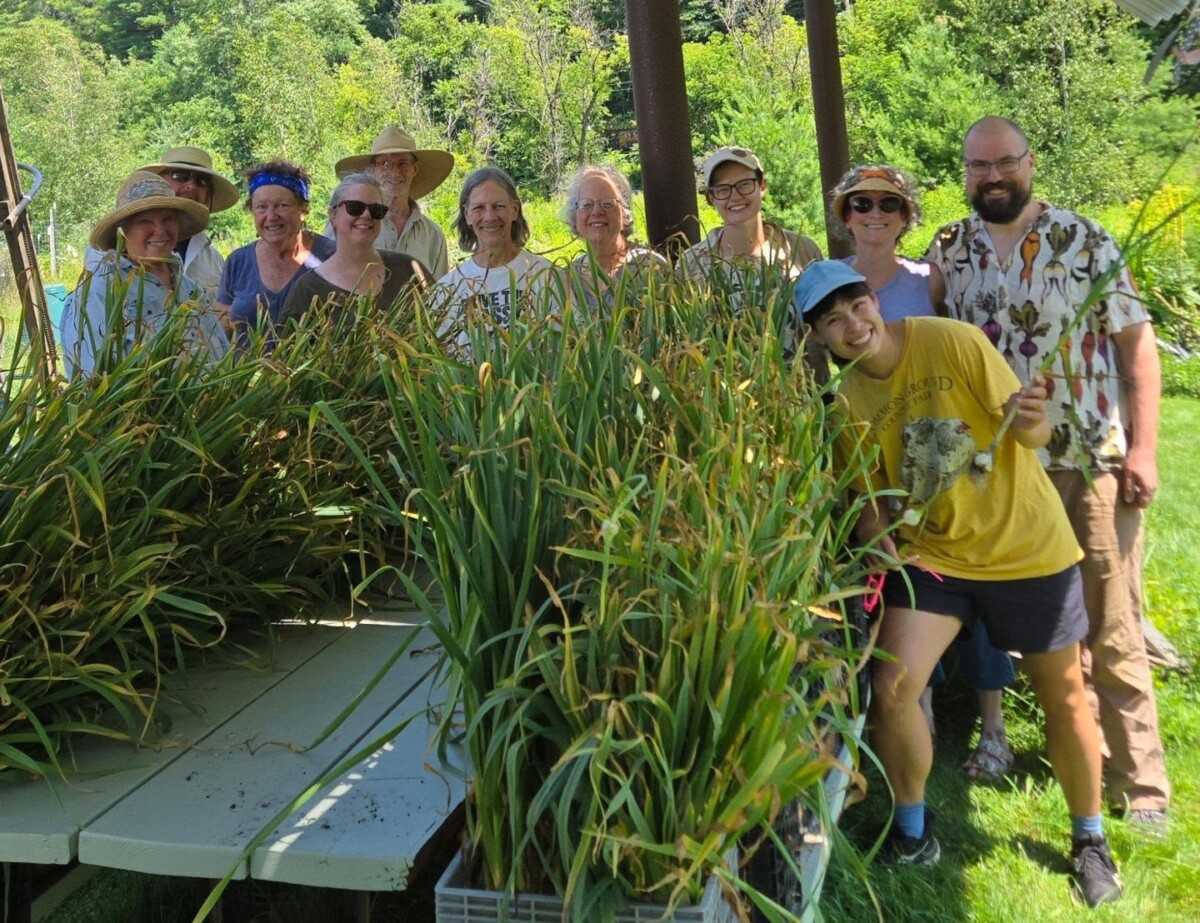
A look back at garlic harvest day says all you need to know about why we grow this crop.