Potatoes are reliably successful and delicious garden crops. There’s labor, but it’s not the hardest food to grow.
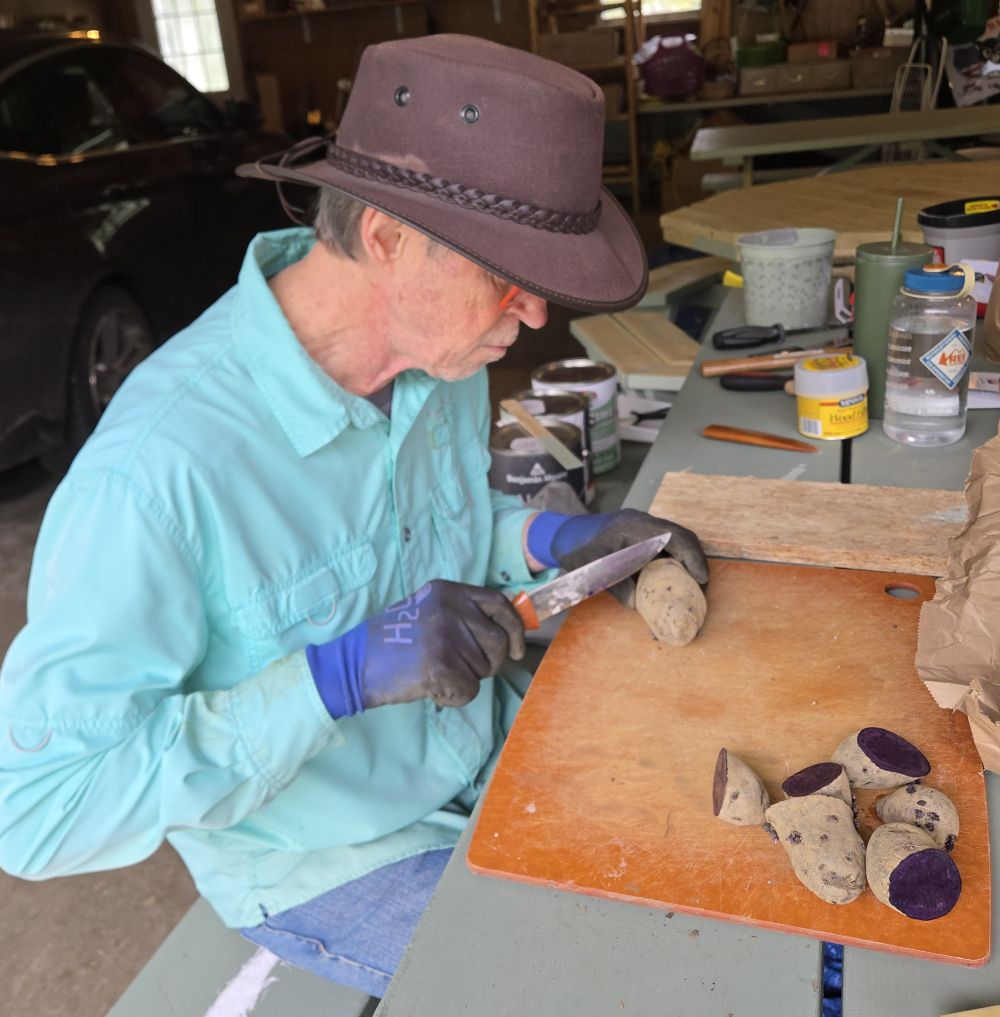
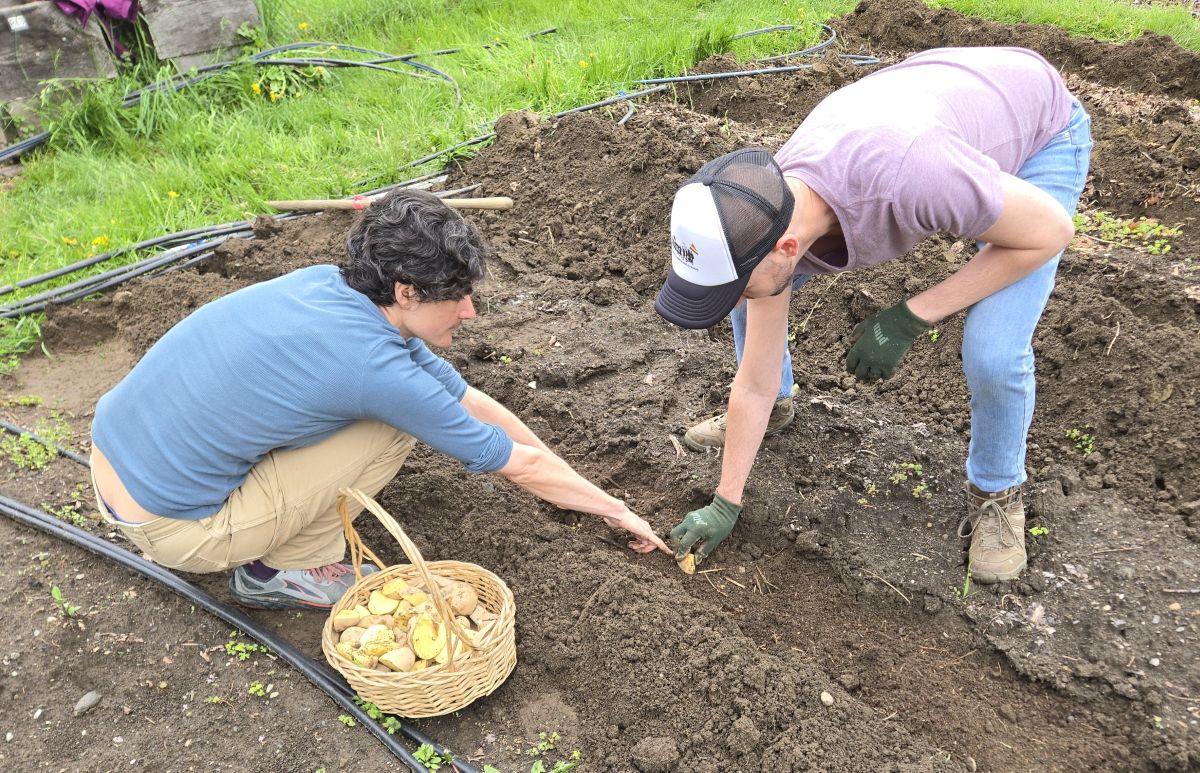
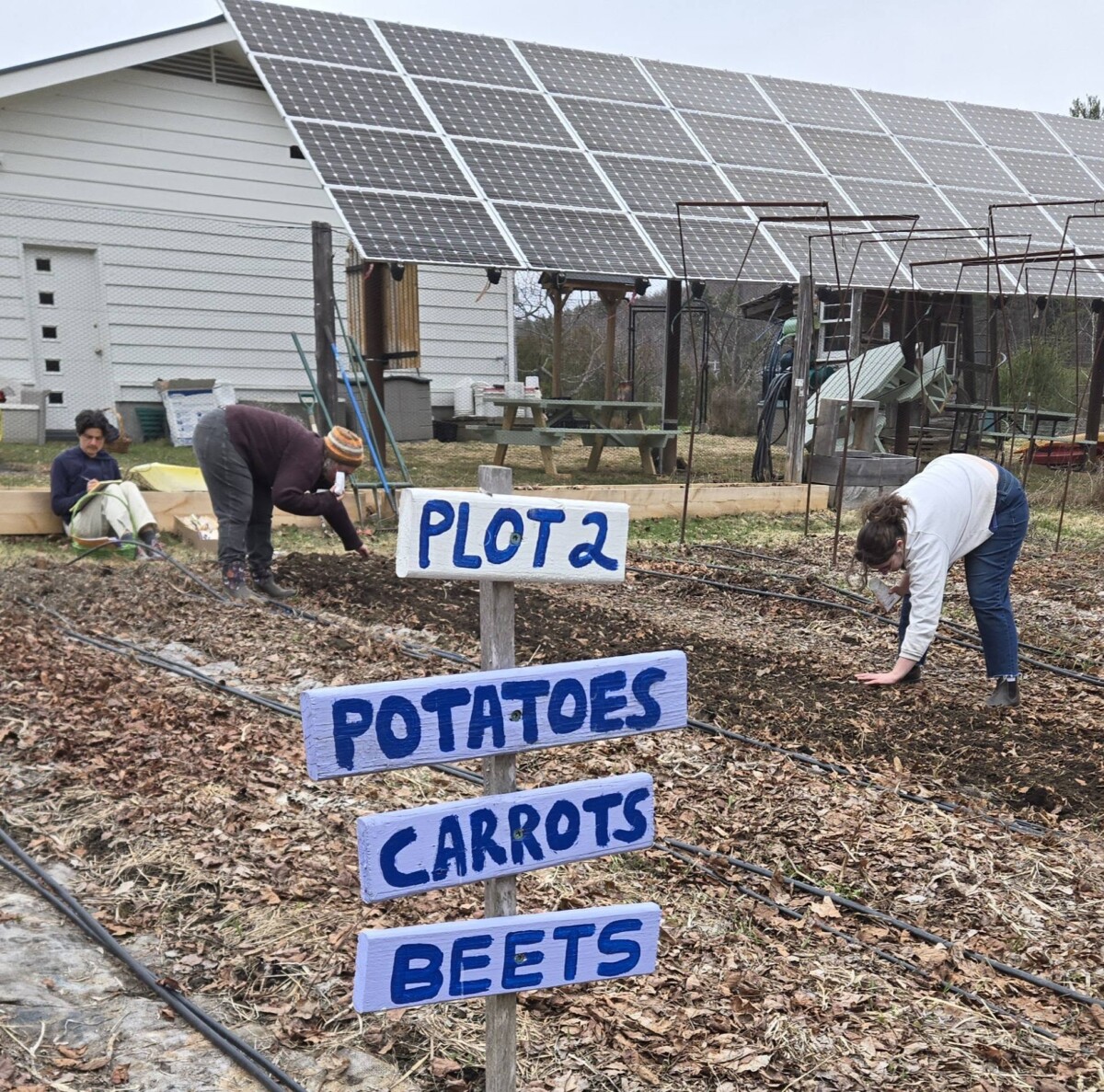
Planting potatoes is a big group effort, and harvesting is a whole group event—all very satisfying!
The stretch of time between potato planting and potato harvest is filled with . . . beetles. Colorado potato beetles, three-lined potato beetles, you name it. This calls for a bug-picking work party.
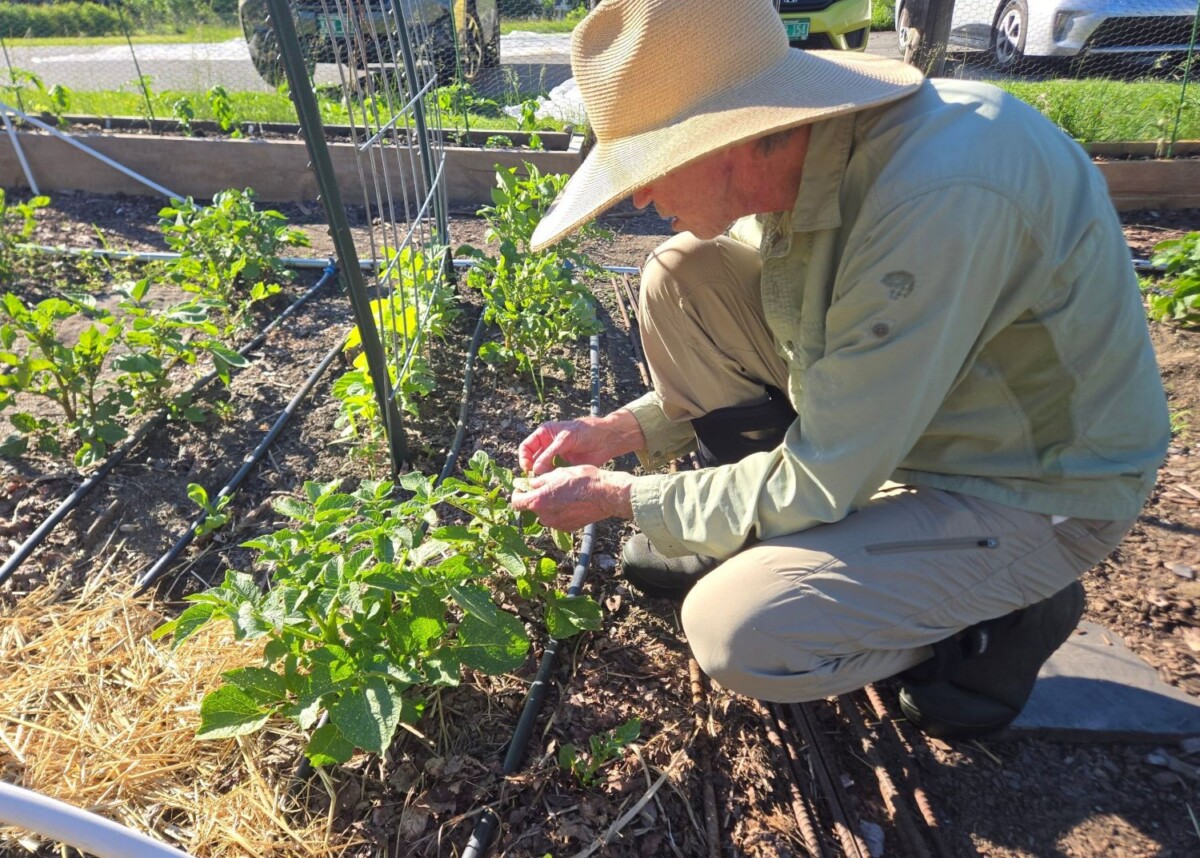
Bug picking is an organic gardening practice that can be part of an integrated pest management (IPM) plan.
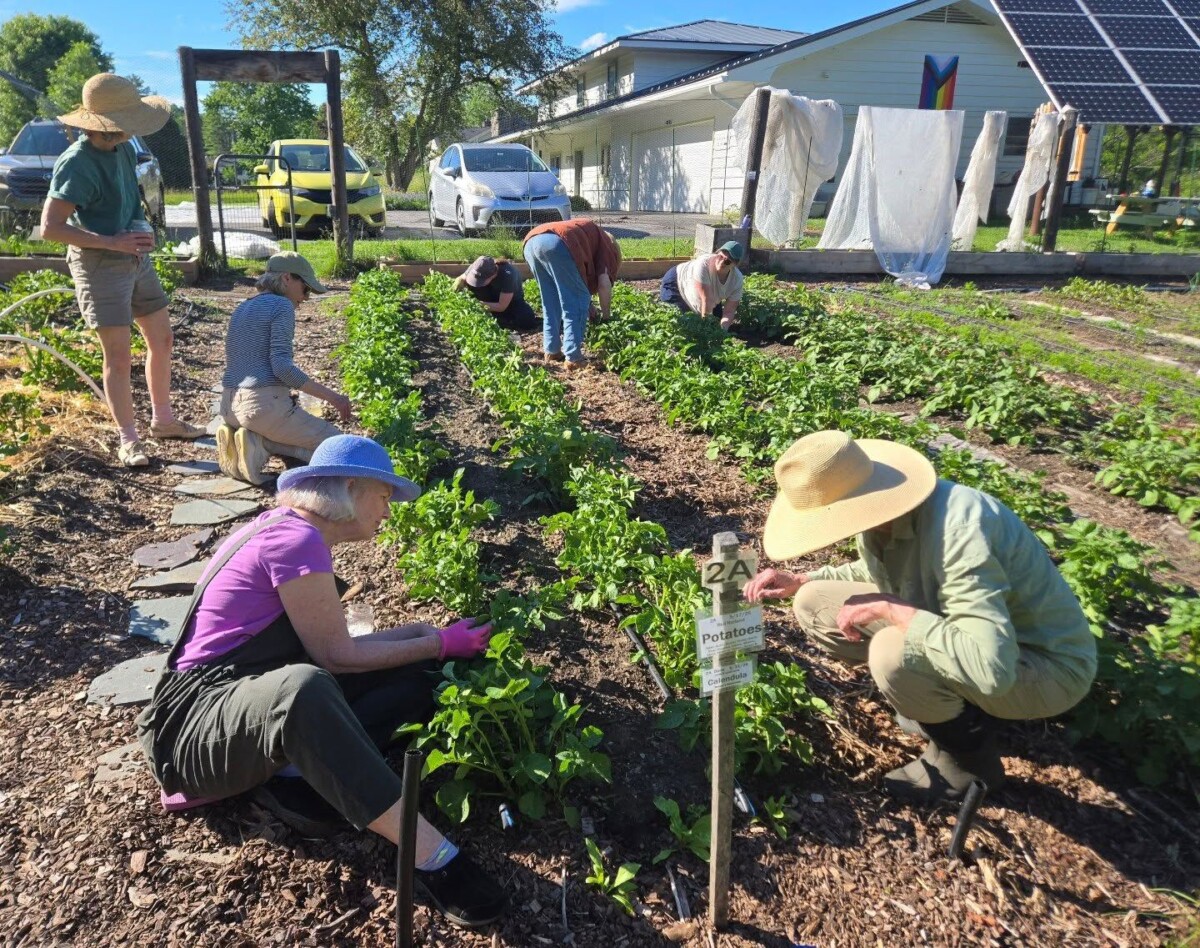
Like excellent copyeditors, gardeners made two eagle-eyed passes through each potato row. They remove not only beetles but eggs.
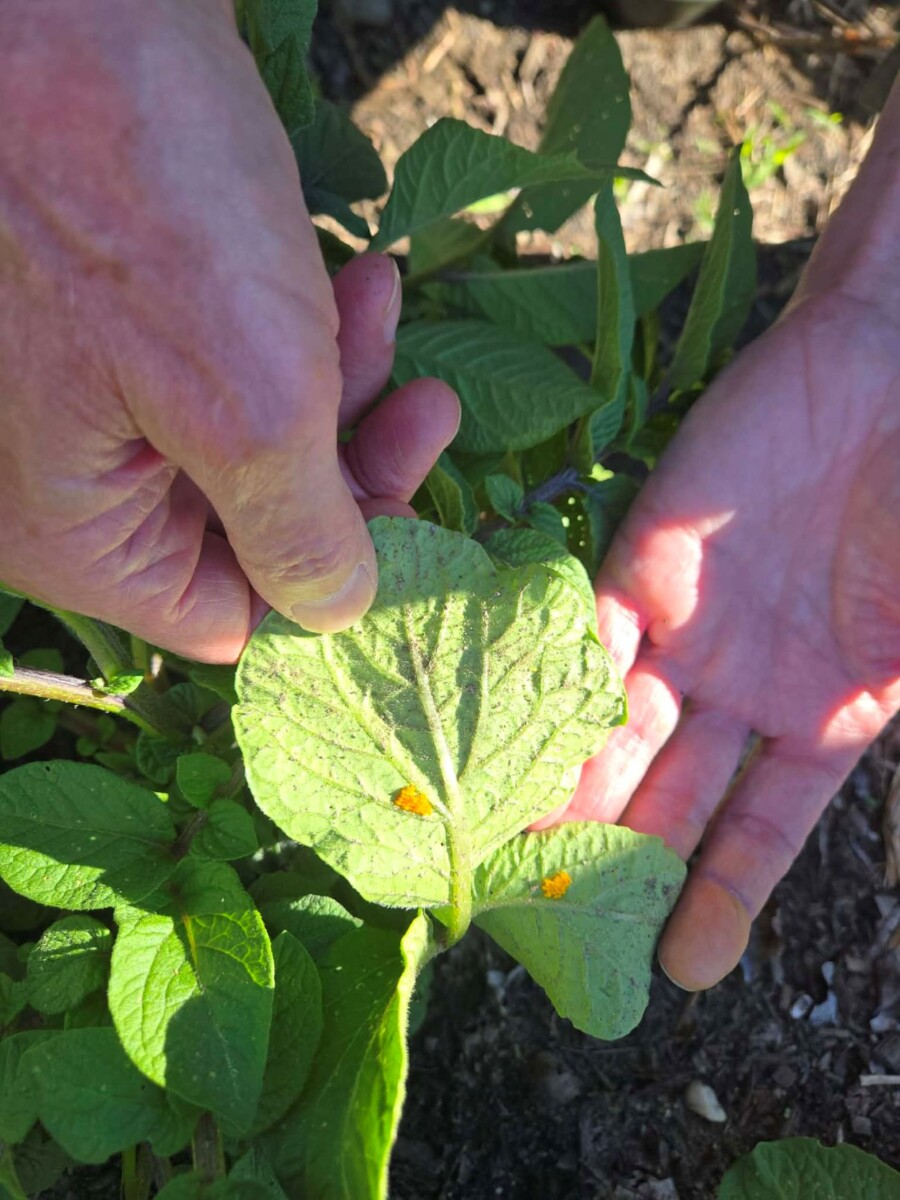
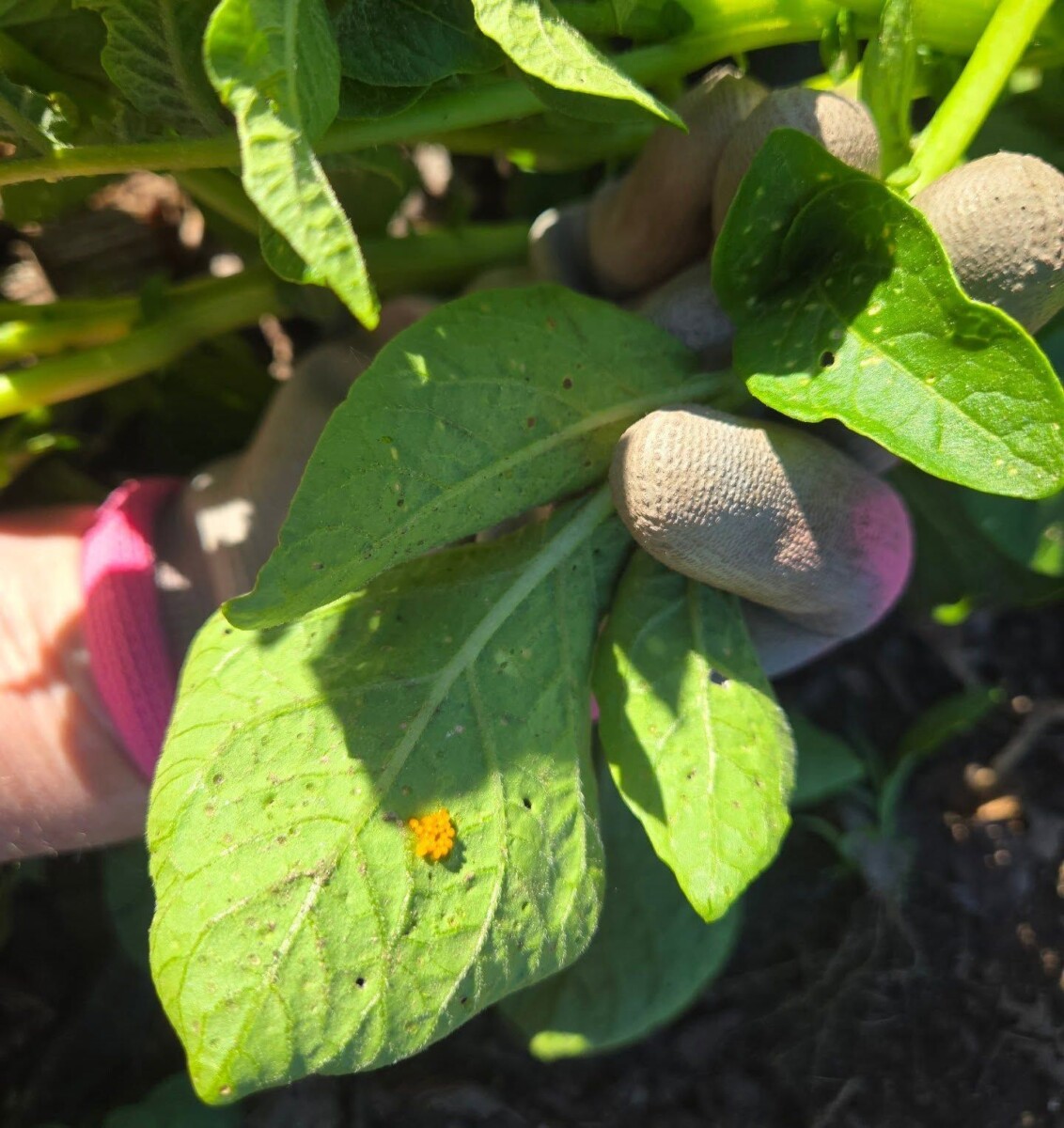
This means literally turning over every leaf.
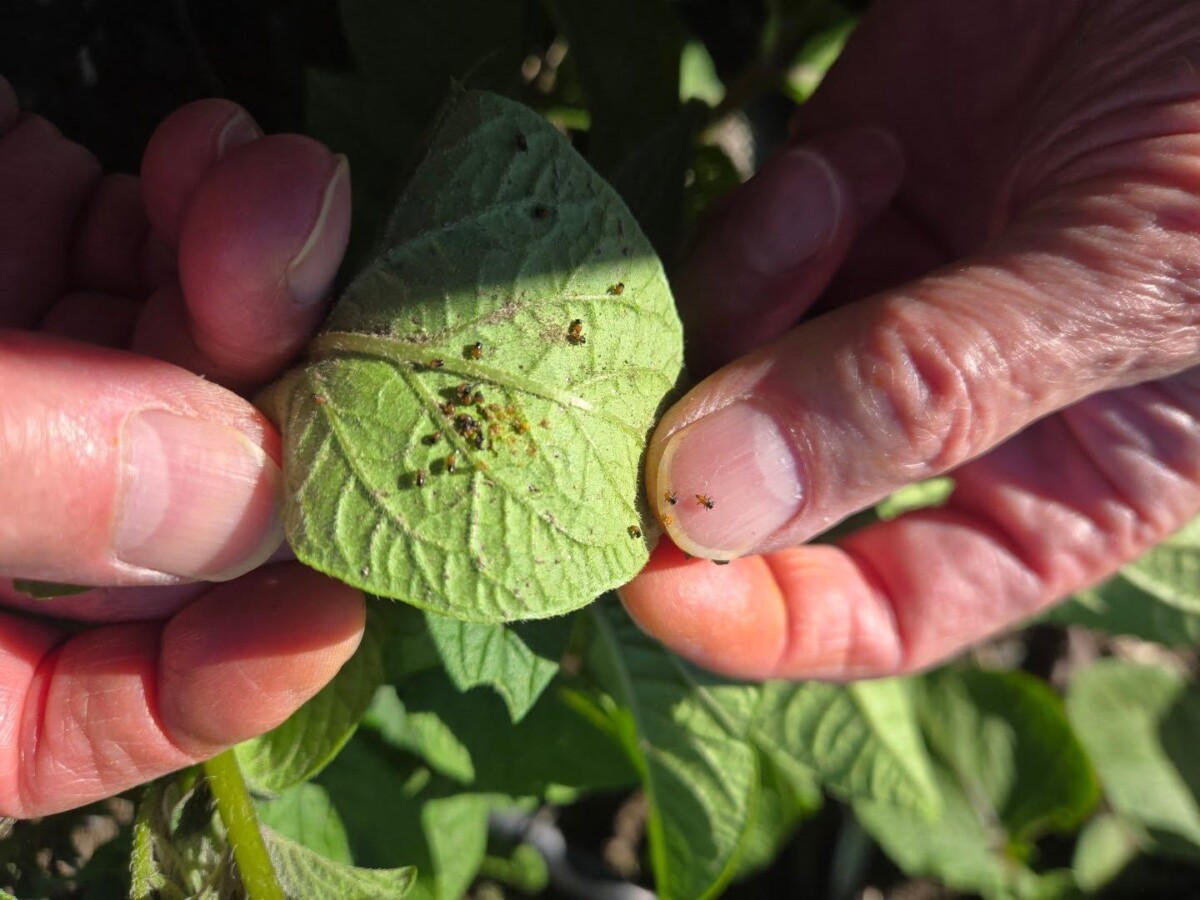
This is what the little buggers look like when they’ve just hatched.
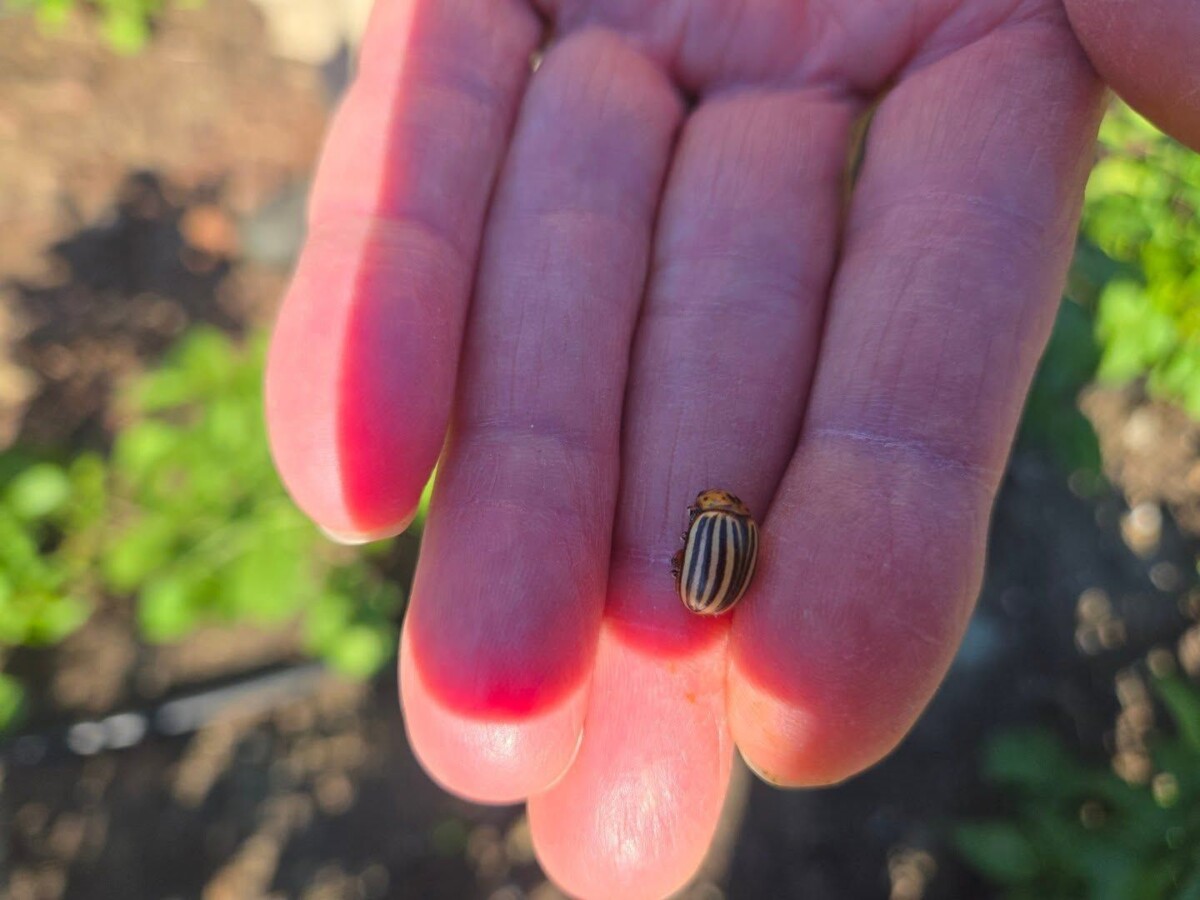
This adult Colorado potato beetle would have eaten a lot. RIP! The garden and its gardeners coexist with many species, including those who chomp the crops. But setting limits prevents crops from being decimated.
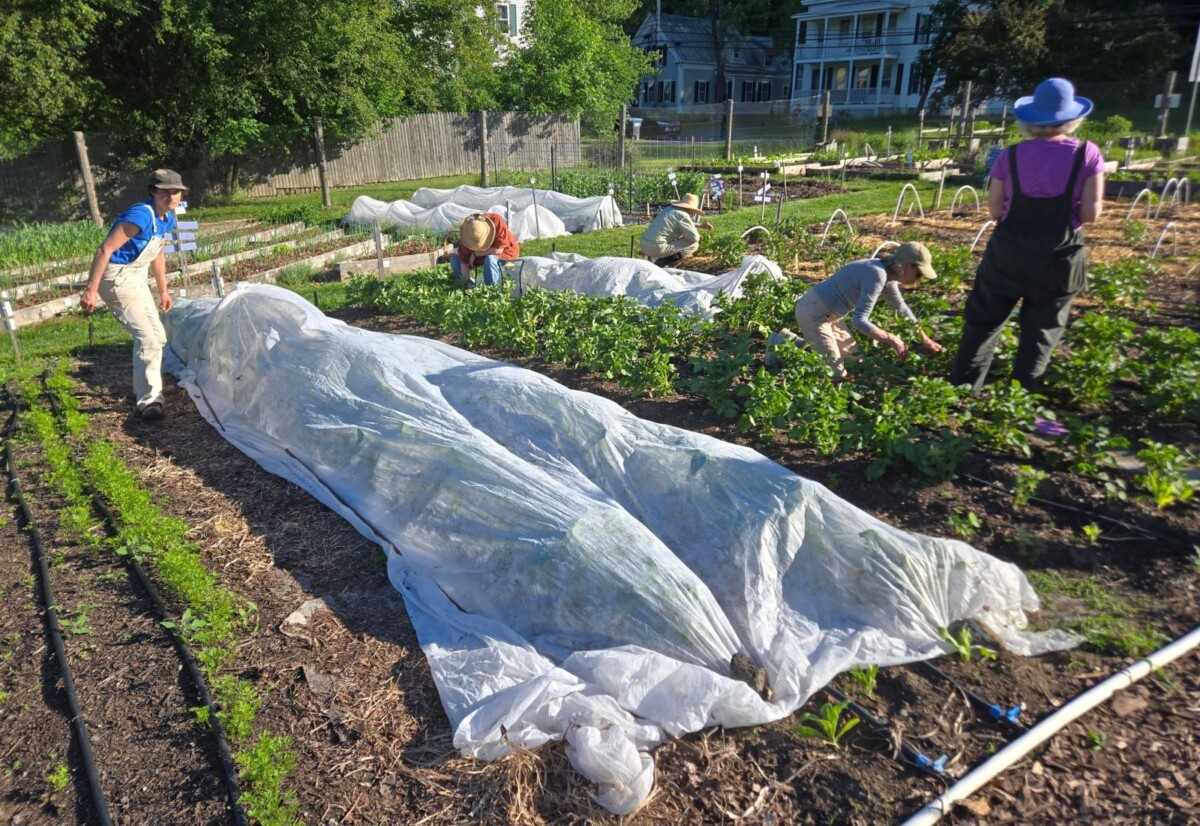
Instead of repeating the beetle-and-egg-picking task ad infinitum, gardeners drape floating crop cover over the potato rows. The potato plants are strong; this light fabric won’t bother them. It’s weighted at the ends with rocks and along the sides with long pieces of rebar.
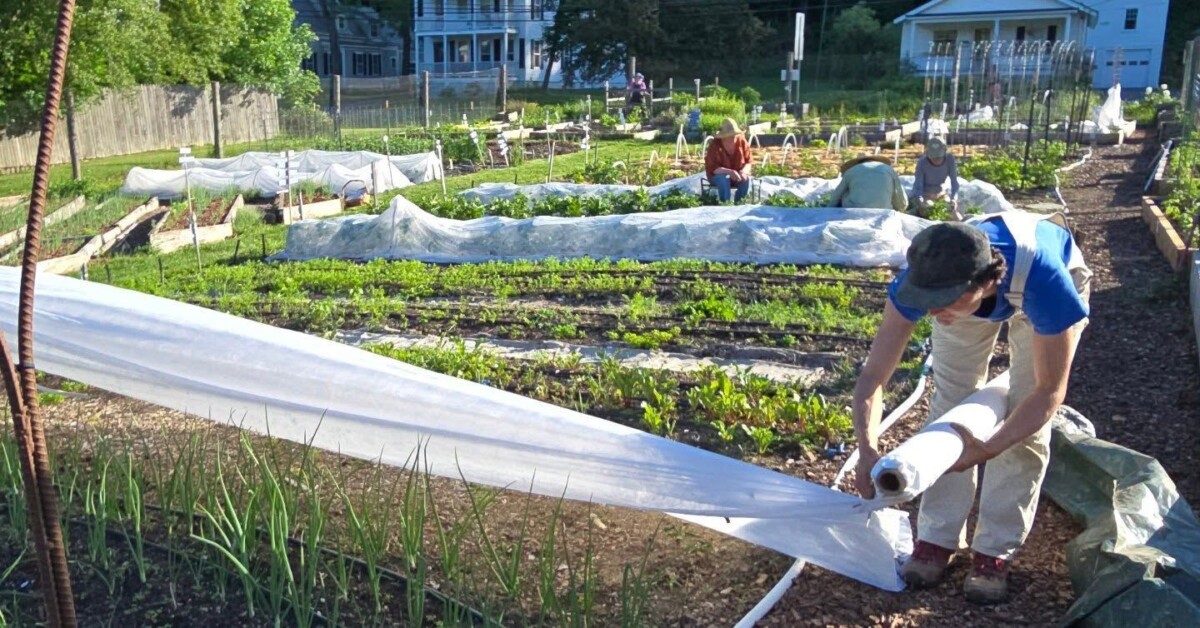
Drip-irrigation hoses run alongside the potato plants to keep them hydrated. When the potato plants start flowering, gardeners will then pull off the row cover and drape it over the winter squash plants, which will appreciate the protection from their own set of predators. Potatoes propagate through tubers; though they may not require pollinators, but bees do pollinate them, and we’re here for the bees!
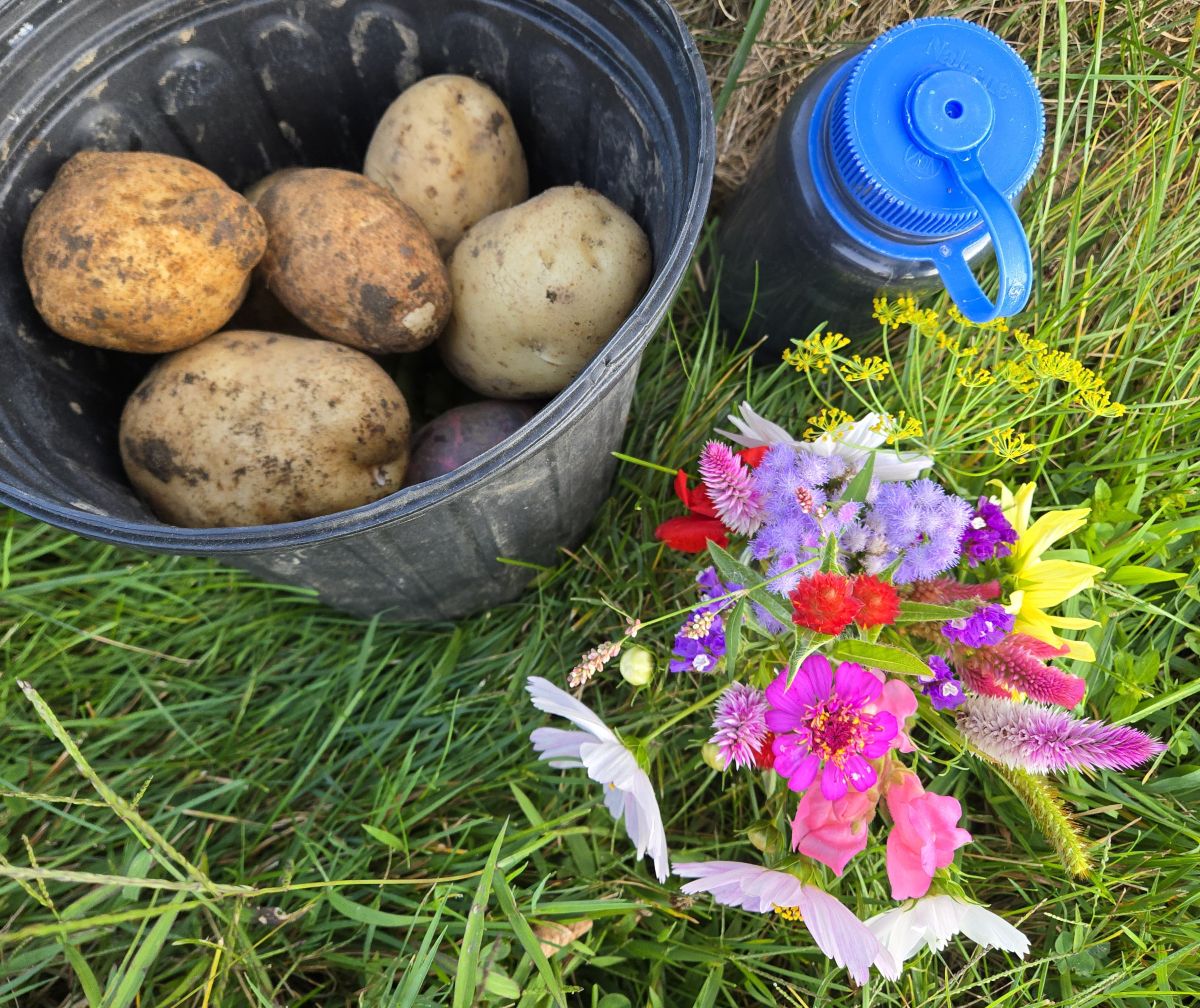
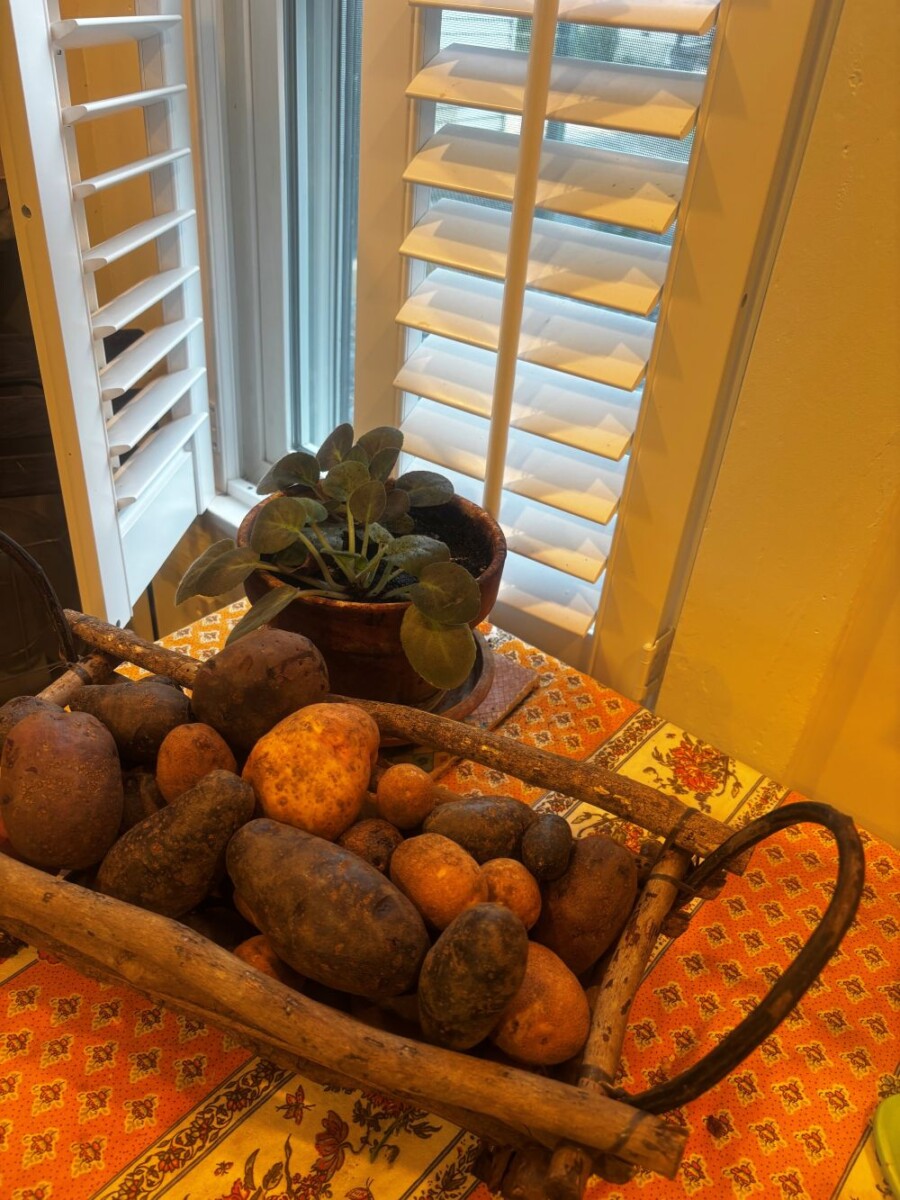
Looking ahead to yum!